|
Capital Provider Showcase
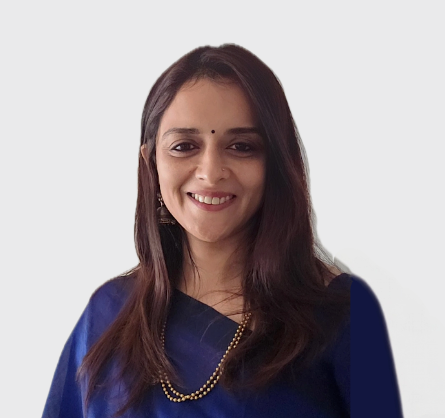
Dialogue with Sowmya Suryanarayanan, Managing Director, Impact and ESG, Aavishkaar Capital
|
|

1
The Impact Report 2025 places strong emphasis on institution building as a driver of long-term transformation. Could you clarify what is counted as institution building in Aavishkaar’s framework? For instance, how do you distinguish between standard business expansion and true institutional development?
|
Aavishkaar Group’s idea of institution building is inseparable from the beliefs on which our group was founded. We began with a simple conviction: that entrepreneurs, when trusted, can solve some of the most complex social and economic problems. But very early on, we learned that entrepreneurship alone is not enough. For these solutions to move beyond isolated success stories, we also require risk capital. Entrepreneurs working in underserved markets need capital that absorbs uncertainty. Impact is an outcome as a consequence of solving real problems at scale. And finally for all of these to work, we require an ecosystem.
Institution building, in this context, is what allows these four pillars to reinforce each other over time. At the enterprise level, it means helping founders translate purpose and solutions that outlast individuals. At the ecosystem level, it means creating platforms, industry bodies, and networks that reduce friction, set norms, and make success repeatable.
This is how Aavishkaar draws a distinction between investing in business and institution building. We believe that growth is about scale in the presence of support and institution building is about continuity in its absence. When entrepreneurs continue to access capital, attract talent, and deliver impact long after Aavishkaar steps back, the ecosystem is doing its job.
|
2
The report reflects Aavishkaar’s involvement in nurturing ecosystem-level institutions such as industry bodies, convening platforms, and networks. From your experience, how do such institutions complement enterprise-level investing in enabling impact at scale?
|
Our founder, Mr. Vineet Rai, based on his early experience in setting up India’s first incubator at IIMA, believed that even strong enterprises struggled when the surrounding ecosystem was thin. And this struggle is multifold in underdeveloped geographies where capital is fragmented and stakeholders do not work together.
Institutions like Intellecap, Sankalp, GIIN, MFIN, IIC, and our engagement with global platforms emerged from this thought process. Their role was not to showcase just successes, but to connect and understand how all stakeholders can play a role in building the impact investing continuum.
What surprised us was how quickly these institutions began shaping the ecosystem across the geographies we operated in. The Impact Report 2025 reflects this shift clearly. Many enterprises reached scale not because they were exceptional, but because the ecosystem around them became legible. We believe that ecosystem institutions did not dilute impact; they multiplied it. They turned isolated wins into patterns others could follow.
|
3
At what stage of maturity or systemic stability does Aavishkaar decide to step back from the institutions it helped build? How do you ensure that the "institutional DNA" and the impact mission remain intact once Aavishkaar’s direct influence or capital is no longer central to the organization?
|
Aavishkaar has always taken up very tough challenges, whether it was allocating capital to entrepreneurs in low-income states of India or setting up a whole new fund to invest in frontier markets, or building the impact investing ecosystem in Africa or building an entire ecosystem on circular solutions where none existed before.
In each case, we asked ourselves a few simple questions. Is there an idea or innovation that can genuinely solve a complex social problem? Is impact ‘intentional’? What kind of support is needed for this solution to succeed? And does the existing system have the ability to support it, or does a broader ecosystem need to be built? Most importantly, can the solution be repeated in other places?
Protecting the mission requires intentional design from the beginning. This makes the mission drift harder. For us, stepping back does not mean walking away. Aavishkaar often continues as a contributor or advisor, but not as the driving force. This allows institutions to grow on their own while holding on to the values that shaped them.
|
4
Across the report, there is a clear focus on working in low-income states and frontier markets. What does your 2025 impact data reveal about the gap between perceived risk and actual risk in these geographies? Do different geographies require a fundamentally different capital stack (e.g., more grant capital vs. equity) to be effective?
|
Our 2025 impact data shows that enterprises in low-income and frontier geographies perform comparably to mainstream markets once early ecosystem frictions are addressed, with similar follow-on rates and exit pathways. Over 40% of our India fund IV was invested in low-income states, reaching 72 million underserved beneficiaries and creating over 260,000 jobs. Of the 16 companies we invested in from this fund, 63% raised follow-on capital, and several scaled to large, profitable exits. Milk Mantra and HR Foods from Odisha and Jharkhand grew to ~INR 275+ crore enterprises and were acquired by Hatsun Agro Product and Dodla Dairy respectively. AgroStar scaled to a ~INR 1000+ crore business with over USD 180 million raised from mainstream investors. Similarly, our USD 48 million frontier fund across Bangladesh, Indonesia, and Sri Lanka delivered impact to ~6 million beneficiaries despite COVID and political instability.
What markets label ‘high risk’ is actually ‘high friction’: thin ecosystems, regulatory uncertainty, and lack of networks. Once these are addressed, business performance looks far closer to mainstream ventures. And this is what we were able to achieve through Intellecap, Sankalp Forum and Arohan that took capital to micro-businesses and built platforms and networks.
I believe different geographies do not require fundamentally different capital, just different sequencing and timing. AIF IV combined venture-style risk-taking with disciplined capital deployment. Our frontier fund used equity augmented with technical assistance from development finance institutions to build platforms like the Bangladesh Angel Network. Similarly grant and concessional capital supports long-term ecosystem capacity (like Aavishkaar Foundation's work in Eastern UP or Intellecap's circularity and climate platforms), while credit (like Global Supply Chain Fund and Arohan) back enterprises with repeatable models.
Capital doesn't change because a place is poor; it changes because the ecosystem is young. When institution building is done well, the capital looks similar to "comfortable" geographies, just with more imagination and patience at the start.
|
5
Looking ahead, the report also reflects on emerging areas such as climate action, deep technology, and new forms of innovation. How is Aavishkaar thinking about building institutions that can remain relevant and resilient as these themes continue to shape the impact landscape over the coming years?
|
At Aavishkaar, we see the future as a set of themes to chase, but as systemic shifts that one needs to prepare for. We believe climate-tech, AI, and deep-tech have the potential to disrupt markets in unprecedented ways and will test existing institutions.
Our two decades of work in the impact investing space has taught us that technology moves quickly, while institutions move slowly. Our work lies in closing that gap, not by speeding institutions up recklessly, but by making them more adaptive, ethical, and resilient.
What we are building now are institutions that can learn faster than the risks they face. In climate, this means platforms that can finance transition at scale. In deep technology and defence-linked innovation by investing in the right models such as New Trace and Vecmocon, as well as establishing the right partnerships like with Jamwant Ventures.
As AI and automation increasingly drive impact investing, there's a risk of losing ‘intentionality’. Our institutional safeguard involves rethinking our Impact Measurement and Management Frameworks requiring human judgment, not just algorithmic allocation. This four-pillar approach (Impact Screening, Benchmarking, Forecasting, Monitoring) ensures that even as we use AI for data processing, impact intent remains human-centered. We're embedding this framework in portfolio company governance, ensuring sustained impact priority even 10 years post-exit.
The institutions that will matter in 2035 won't be rigid "climate tech" funds or "deep tech" funds. They'll be problem-oriented, adaptive institutions with governance flexibility to remain relevant as solutions evolve. Our current work is about building that adaptability into our institutional DNA. That is the unfinished work ahead.
|
.png)
Snapshots from Aavishkaar Group’s journey – entrepreneurs, farmers, workers and partners across Asia and Africa building livelihoods, inclusion and climate resilience
To know more, click the link: https://aavishkaargroup.com/impact/
|
|
|
Sowmya Suryanarayanan, Managing Director, Impact and ESG, Aavishkaar Capital
Sowmya Suryanarayanan, Managing Director, Impact and ESG, Aavishkaar Capital, a global pioneer impact fund manager investing in enterprises across India, South and Southeast Asia, and East Africa. She drives impact, gender, and ESG value creation across Aavishkaar’s funds and portfolio companies. She holds a Master’s degree in Economics from Stella Maris College, Madras University, and completed an Executive Education Program in Social Finance at the Saïd Business School, University of Oxford. She received special appreciation from India’s Finance Minister for the Aavishkaar Group Impact Report 2022 and was featured on the Forbes W-Power Self-made Women List in 2024.
About Aavishkaar Capital
Aavishkaar Capital is a pioneering global impact fund manager investing across India, Emerging Asia, and Sub-Saharan Africa. Founded in 2001, Aavishkaar Capital pioneered the venture capital approach to early-growth stage enterprises in overlooked geographies and sectors. The firm has raised eight funds, made 80+ investments, and delivered 52+ responsible exits including four IPOs in financial inclusion. Aavishkaar Capital invests in financial inclusion, sustainable agriculture, climate solutions, and essential services, impacting over 140 million underserved individuals across Asia and Africa.
For more information, go to: https://aavishkaarcapital.in/
|
|
About Impact Investors Council:
Impact Investors Council, India (IIC) is a member-based national industry body formed with an
objective to build and strengthen the impact investing eco-system in India. To know more about our work visit https://iiic.in or reach out to secretariat@iiic.in
|
Disclaimer: Data and Information in this newsletter is made available in good faith with the exclusive intention of helping market and ecosystem players, policymakers and the public build a greater
understanding of the Indian impact investing market. The data is collated from sources believed to be reliable and accurate at the time of publication. Readers are urged to exercise independent judgment and diligence in the
usage of this information for any investment decisions
Some of the information provided in this newsletter is supplied by third parties. It is important that all users understand that third party information is not an endorsement of any nature and has been put together with the
sole purpose of benefiting stakeholders.
|
| Unsubscribe |
|
|
|