|
Capital Provider Showcase
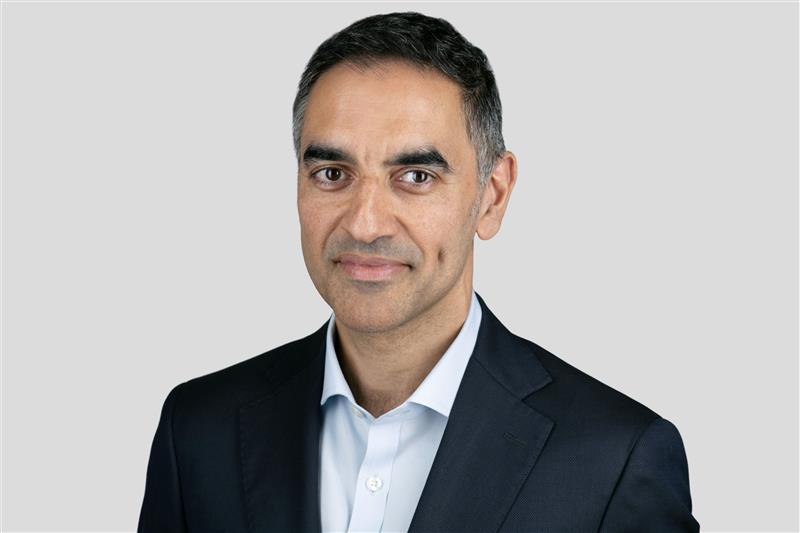
Dialogue with Samir Abhyankar, Partner and Head of India, Lightrock
|
|

1
How has Lightrock’s healthcare investment strategy evolved? From early growth capital deployment to a more systems-oriented approach? How has this evolution been shaped by global health priorities such as UHC, SDG-3, and increasing focus on affordability and access in emerging markets?
|
Lightrock has invested over $200 million in the healthcare sector in India to date. The initial phase of our healthcare investing journey was focused on earlier stage, venture investments in very high impact businesses. Over the last few years, we have evolved our investment strategy to focus on later-stage, more mature businesses where we are able to partner with management teams and founders to help their business scale. Many of these businesses have generated superior financial returns for us and at the same time, are driving outsized impact outcomes.
|
2
Given that progress toward UHC remains uneven across, what does Lightrock identify as the single most critical bottleneck preventing healthcare impact from scaling sustainably?- financing models, affordability, governance, or delivery capacity? How does this constraint shape both your investment selection and post-investment value creation?
|
Raising the number of people covered under healthcare schemes or insurance plans, along with increasing reimbursement rates, will be critical for scaling private healthcare provision and extending high-quality care to more patients. Out-of-pocket expenses on healthcare still account for nearly 40% of total healthcare spending. This high percentage limits the affordability of various treatments, particularly for chronic conditions like cancer, which are expensive. As healthcare schemes grow, they achieve economies of scale, which enhances their ability to provide a broader range of services, treatment options, and preventative healthcare measures to a larger population.
|
3
What frameworks and methodologies guide Lightrock's measurement of long-term health outcomes beyond output metrics (patients reached, consultations delivered, facilities opened)? How do you operationalize the assessment of clinical outcomes, affordability improvements, and quality of care when evaluating real-world impact? Can you share how your Impact Measurement and Management (IMM) approach integrates with SDG-3 indicators and UHC service coverage metrics to track both service coverage and financial protection dimensions?
|
As part of our due diligence, we assess the causality of health solutions/interventions’ contribution to broader health outcomes and objectives (i.e. SDG 3 targets) based on the available evidence. Our private equity impact strategies aim to invest in proven impact solutions, where we are able to draw on established evidence that a company’s proven products, services, or interventions significantly contribute to solving pre-defined systemic challenges. We use a proprietary impact model that is Theory of Change and Logic Model (Kellogg Foundation) frameworks for assessing and establishing this. From there we derive a set of the most meaningful, efficient and pragmatic impact KPIs to regularly track the company’s operational and impact-related growth, both in terms of scale and depth of impact and also include KPIs to control for potential shifts or mission drift (e.g. on affordability or target customers). We typically use a combination of IRIS+ aligned (health core metric sets) and more company specific/bespoke metrics.
|
4
How does Lightrock navigate trade-offs between financial returns and social impact in healthcare, particularly when serving lower-income populations? What safeguards do you use to prevent impact drift toward higher-income segments post-investment?
|
We do not see investing impactfully as a balance or trade-offs between generating superior financial returns and driving positive impact outcomes in healthcare. As a business, we believe that impactful and sustainable companies tackling pressing challenges will deliver better returns over the long term.
For example, Kauvery Hospitals, a hospital chain we have invested in that operates in South India delivers affordable care to Tier 2 and 3 cities in India while also operating in Chennai and Bangalore. Similarly, Pharmeasy delivers affordable medication to ~20,000 PIN codes across India.
The main safeguard we use is making sure we have a strong alignment with the founders. This comes from getting to know them, understanding their DNA and vision for growth and helping them execute on it so that we are building a high-impact and highly profitable business.
|
5
Looking ahead, how is Lightrock shaping its future healthcare investment thesis in India in response to persistent out-of-pocket expenditure, uneven quality of care, and the expanding role of public health systems? Which sub-sectors or care models do you believe are best positioned to drive the next phase of scalable, affordable, and system-level impact over the next decade?
|
We are interested in backing mature businesses within the following sectors: pharmaceuticals and biopharmaceuticals, where companies are capable of bringing innovative products to market; medical devices that are locally manufactured, driving import substitution while meeting quality standards for entry into EU and rest of the world markets; and single-specialty clinics, which we believe have significant growth potential across various specialties.
|
|
|
Samir Abhyankar, Partner and Head of India, Lightrock
Samir is a Partner and Head of India at Lightrock. Previously, he was the Managing Director and Head of the Financial Services Group at British International Investment (BII), where he oversaw investments in the financial services sector. He also led the Manufacturing, Agribusiness, and Forestry team under the Industries, Technology, and Services (ITS) Group at BII. Before joining BII, Samir was a Partner at TPG Growth and the Rise Fund, helping to establish their activities in Africa. He has also worked as an investor with Satya Capital and Citi Venture Capital International. Earlier in his career, Samir held roles at the World Bank and Marakon Associates.
Samir graduated from Tulane University with a degree in Economics and Political Science, earned a Master’s in International Affairs from Johns Hopkins School of Advanced International Studies, and completed his MBA at INSE
About Lightrock
Lightrock is a global investment platform committed to building a sustainable future. Operating across private and public markets, Lightrock advises over $5.5 billion in assets and Lightrock funds invest in Europe, North America, Latin America, Asia, and Africa. Lightrock is a certified B Corp with a dedicated team of over 130 professionals working across a network of seven offices. Lightrock’s private market investing is focused on backing purpose-driven companies tackling the world’s biggest challenges. Lightrock-advised funds have invested growth equity in more than 90 companies that pursue scalable and tech-driven business models around the key impact themes of people, planet, and productivity.
For more information: www.lightrock.com
|
|
About Impact Investors Council:
Impact Investors Council, India (IIC) is a member-based national industry body formed with an
objective to build and strengthen the impact investing eco-system in India. To know more about our work visit https://iiic.in or reach out to secretariat@iiic.in
|
Disclaimer: Data and Information in this newsletter is made available in good faith with the exclusive intention of helping market and ecosystem players, policymakers and the public build a greater
understanding of the Indian impact investing market. The data is collated from sources believed to be reliable and accurate at the time of publication. Readers are urged to exercise independent judgment and diligence in the
usage of this information for any investment decisions
Some of the information provided in this newsletter is supplied by third parties. It is important that all users understand that third party information is not an endorsement of any nature and has been put together with the
sole purpose of benefiting stakeholders.
|
| Unsubscribe |
|
|
|