|
Enterprise Showcase
Dialogue with Dr. Vishesh Kasliwal, Co-founder & CEO, Medyseva Technologies Pvt. Ltd.
Dr. Rachita Kasliwal, Co-founder, Medyseva Technologies Pvt. Ltd.
|
|
1
What specific gap in India’s rural and semi-urban healthcare system led you to start Medyseva, and how has that problem statement evolved? Looking back, what assumptions about access, trust, or care delivery proved incomplete once you began working closely with communities and partners?
|
When the pandemic hit, the gap stopped being an abstract statistic for me — it became a phone that never stopped ringing. I was giving advice to family, friends and strangers in small towns: people who had nowhere reliable to turn, who were travelling hours to cities or depending on under-qualified local practitioners. That experience made the problem immediate and personal: rural communities lacked not just doctors, but a functioning care journey — from diagnosis to prescription, medicine, and follow-up — all in one place. That’s what pushed us to build Medyseva.
Over the last three years, as we’ve supported 75,000+ consultations and conducted 200+ health camps reaching over 20 lakh people, that problem has deepened in a specific way. Early on, we framed it as “access to doctors.” What we found on the ground was broader and more stubborn: access is only useful if it leads to completed care. Patients could get a teleconsultation, but then fail to get the prescribed tests or the medicines, or drop out of follow-up. So the problem evolved from “bring doctors closer” to “ensure continuity and treatment completion in the last mile.” Our operations and product choices — Kendras with assisted staff, diagnostics coordination, EMRs, and now MedyVend, our AI-enabled remote medicine dispensing device — are all responses to that evolved problem.
Some early assumptions that proved incomplete:
-
Digital-first adoption: We assumed people would embrace app-based care quickly. In reality, many patients prefer human assistance; our Kendras fill that gap.
-
Consultation = care: We thought a quality teleconsultation would be enough. But without diagnostics, medicines, and repeat follow-ups, outcomes stayed poor.
-
One-size partner model: We expected partnerships with hospitals/colleges to scale uniformly. Instead, each institution required different incentives, workflows and hand-holding.
-
Simple training fix: We underestimated how much iterative training, protocol design and supervision are needed for consistent quality in rural teams.
Those on-ground lessons are why our model moved from a pure telemedicine play to a phygital, end-to-end care system focused on trust, repeat engagement, and treatment completion — the very things that convince patients to come back and finish their care. Our early traction (consultations, camps and outreach) validated the need, and the rest of our roadmap — including MedyVend — addresses the gaps we couldn’t solve with teleconsultation alone.
|
2
Medyseva today operates a hybrid “phygital” model linking rural clinics with urban doctors through telemedicine and partnerships with institutions. How would you describe your core model and value proposition to (a) rural patients and (b) partner hospitals / medical colleges?
|
At its simplest, Medyseva is a neighbourhood clinic plus a doctor network — a phygital model that stitches a human presence into digital care so healthcare actually reaches people where they live.
(a) To rural patients:
We tell them: “Come as you are — we’ll help.” At every Medyseva Kendra a trained local attendant helps you get a consultation with a qualified doctor via video, records vitals, books tests, saves your medical record, and makes sure there’s a real plan and follow-up. You don’t need to download apps or travel to the city. If medicines are a problem, our MedyVend (being rolled out) will let you collect prescriptions locally. Practically, this means quicker diagnoses, fewer long trips, and a place that patients trust to complete the whole treatment — not just give advice.
(b) To partner hospitals / medical colleges:
We position Medyseva as a low-friction outreach and capacity-extension channel. Partners gain access to rural catchments without heavy capex: their specialists consult remotely, medical students get supervised community exposure, and hospitals receive referral-ready patients who have prior vitals, basic tests and digital records. For hospitals it’s new OPD volume, better continuity for referred patients, and a measurable outreach pipeline. For colleges, it’s a practical teaching site and public-health footprint. Our model is asset-light, standardised, and designed so partners can scale their reach while we manage on-ground operations and tech.
|
3
Beyond basic teleconsultation, you’ve introduced innovations like MedyVend (IoT-enabled medicine kiosks) and vertical programs such as MedyMind / MedyShe / MedyVision. What have these innovations taught you about technology adoption in low-resource settings – and where has simpler or more human-led intervention worked better than tech?
|
What these innovations taught us is that technology in low-resource settings only works when it quietly supports human care instead of trying to replace it.
With MedyVend, adoption did not come from it being an IoT device, but from the fact that it solved a real, everyday problem we saw on the ground—patients completing consultations but failing to access medicines. When technology is directly tied to treatment completion and reduces effort for both patients and frontline staff, people accept it naturally.
At the same time, our vertical programs made it clear where technology must take a back seat. In mental health and women’s health, trust, empathy, and explanation matter far more than platforms or features. A trained local attendant introducing the service, answering questions, and staying with the patient often does more than any digital interface. In ophthalmology too, screening tools help only when someone guides patients through referrals and follow-ups.
Overall, our biggest learning has been this: technology should do the background work—records, standardisation, traceability—while humans stay at the front, building trust and guiding care. In rural settings, simpler, assisted, human-led interventions consistently outperform tech that expects people to adapt to it.
|
4
Medyseva has grown by partnering with medical colleges, hospitals and other institutions to open satellite clinics and centres. Which partnership models have proven most scalable and repeatable, and where have partnerships been more fragile or context-dependent?
|
What we’ve come to understand is that partnerships work best when they are built around shared clinical responsibility, not just distribution or expansion.
The partnerships that have scaled most smoothly for us are those with medical colleges and established hospital systems, where there is a clear clinical backbone. These institutions already operate with protocols, supervision structures, and accountability, which aligns well with how Medyseva delivers care. When doctors see the Kendra as an extension of their practice—rather than a separate digital experiment—the partnership becomes durable and repeatable.
We’ve also seen strong outcomes where there is doctor-led ownership of care, even when delivery happens closer to the community. When clinicians are actively involved in how consultations, follow-ups, and referrals are designed, trust builds quickly—both with patients and within the institution. That trust is what allows a model to be replicated without reinventing it each time.
Where partnerships have been more fragile is when they are built primarily around access points rather than care ownership. In some contexts, local variability—differences in capacity, engagement, or understanding of clinical workflows—can affect consistency.
Over time, this has shaped our approach. We now prioritise partnerships where doctors and institutions are long-term stakeholders in outcomes, not just participants in delivery. That shift has made our growth slower in some places, but far more sustainable and repeatable overall.
|
5
What are the toughest challenges you face in delivering high-quality care in rural and semi-urban India (for example, digital literacy, last-mile logistics, doctor bandwidth, and policy), and can you share one or two course corrections where an initial approach did not work as expected?
|
Honestly, the toughest challenges don’t come from one big constraint, but from many small ones that quietly break care if you’re not careful.
Digital literacy is a big one. Many patients are hesitant about technology, not because they don’t want care, but because they don’t want to feel lost or embarrassed. That’s why assisted care has mattered so much for us. A trained person sitting with the patient often makes the difference between a completed consultation and a dropped one.
The second challenge is the last mile. A good consultation doesn’t mean much if the patient can’t get the prescribed tests or medicines nearby. We saw this repeatedly in our early days—people did everything right during the consult, but treatment broke down afterwards.
Doctor bandwidth and continuity are another constant tension. Specialists are available, but building reliable follow-up and referral pathways takes work. Without proper vitals, records, and context, care becomes fragmented very quickly.
We’ve made a couple of important course corrections along the way. Early on, we believed that a strong teleconsultation experience would be enough. What we saw instead was a lot of one-time interactions. Patients got advice, but many didn’t complete treatment. That pushed us to shift from a digital-first approach to a phygital one, where care is assisted, tracked, and followed through.
Another correction was around scaling. At first, we tried to grow faster by relying on local execution alone. Quality became uneven. We slowed down, invested more in training, standard operating protocols, and supervision, and accepted that doing fewer centres well was better than doing many poorly.
These challenges are ongoing, but they’ve shaped how we think today. We focus less on adding features and more on removing friction—making care simpler, more human, and easier to complete for both patients and doctors.
|
6
Looking 3-5 years ahead, what role do you want Medyseva to play in India’s rural health ecosystem? What kinds of capital or institutional support are most misaligned with rural healthcare delivery today – and what would “patient” or catalytic capital enable that commercial funding cannot?
|
In the next 3–5 years, I want Medyseva to become a dependable layer of India’s rural health ecosystem — not a pilot or a parallel system, but a place communities and institutions genuinely rely on. That means building a network of 250–500 Medyseva Kendras delivering consistent primary and basic specialty care, with stronger referral linkages to hospitals and medical colleges and real continuity of care so patients don’t drop out after the first consultation. If we do this right, fewer people should need to travel to cities for routine care, and when they do, they should arrive better prepared.
What often feels misaligned today is capital that expects rural healthcare to behave like a fast-scaling consumer tech business. Short payback timelines and pressure for rapid scale can push solutions toward app-first models that don’t work in low-resource settings. Building trust, training frontline teams, integrating with public systems, and piloting new care pathways all take time and don’t generate immediate returns.
That’s where patient or catalytic capital matters. It allows us to invest in the slow, unglamorous work — community engagement, training, quality systems, and integration with government and institutional healthcare — that makes care reliable and sustainable. It also enables us to pilot innovations and build infrastructure without compromising affordability.
Commercial capital is essential for scaling what works. But patient capital is what lets you build it properly in the first place.
|
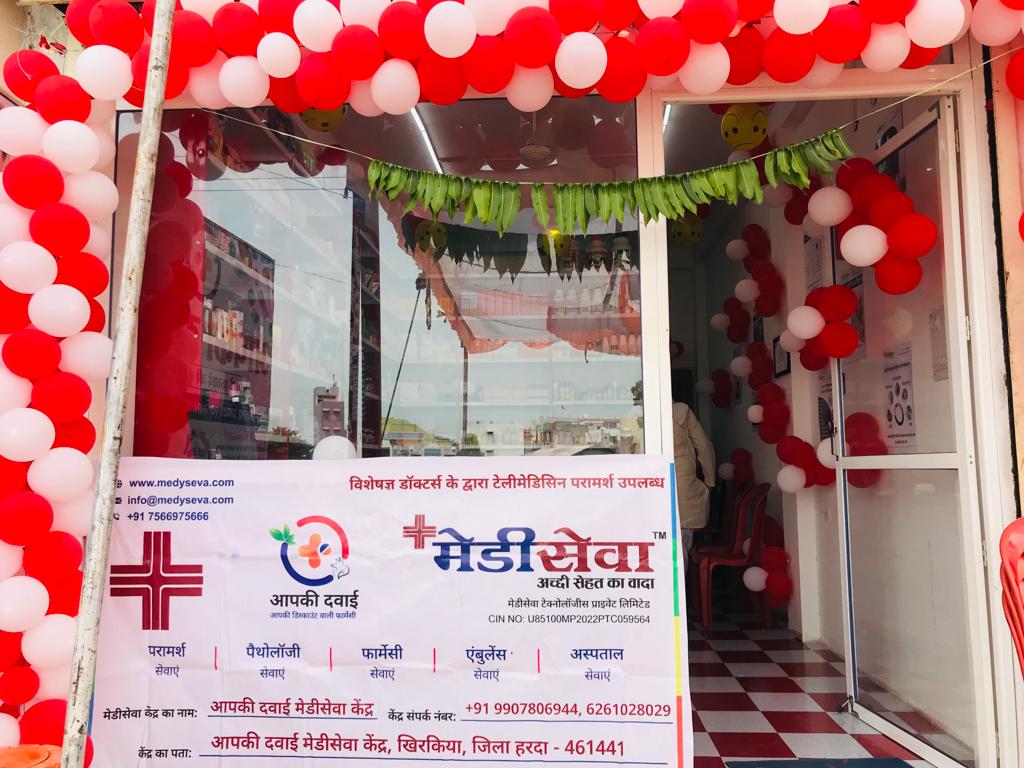
Rural Medyseva Kendra
|
|
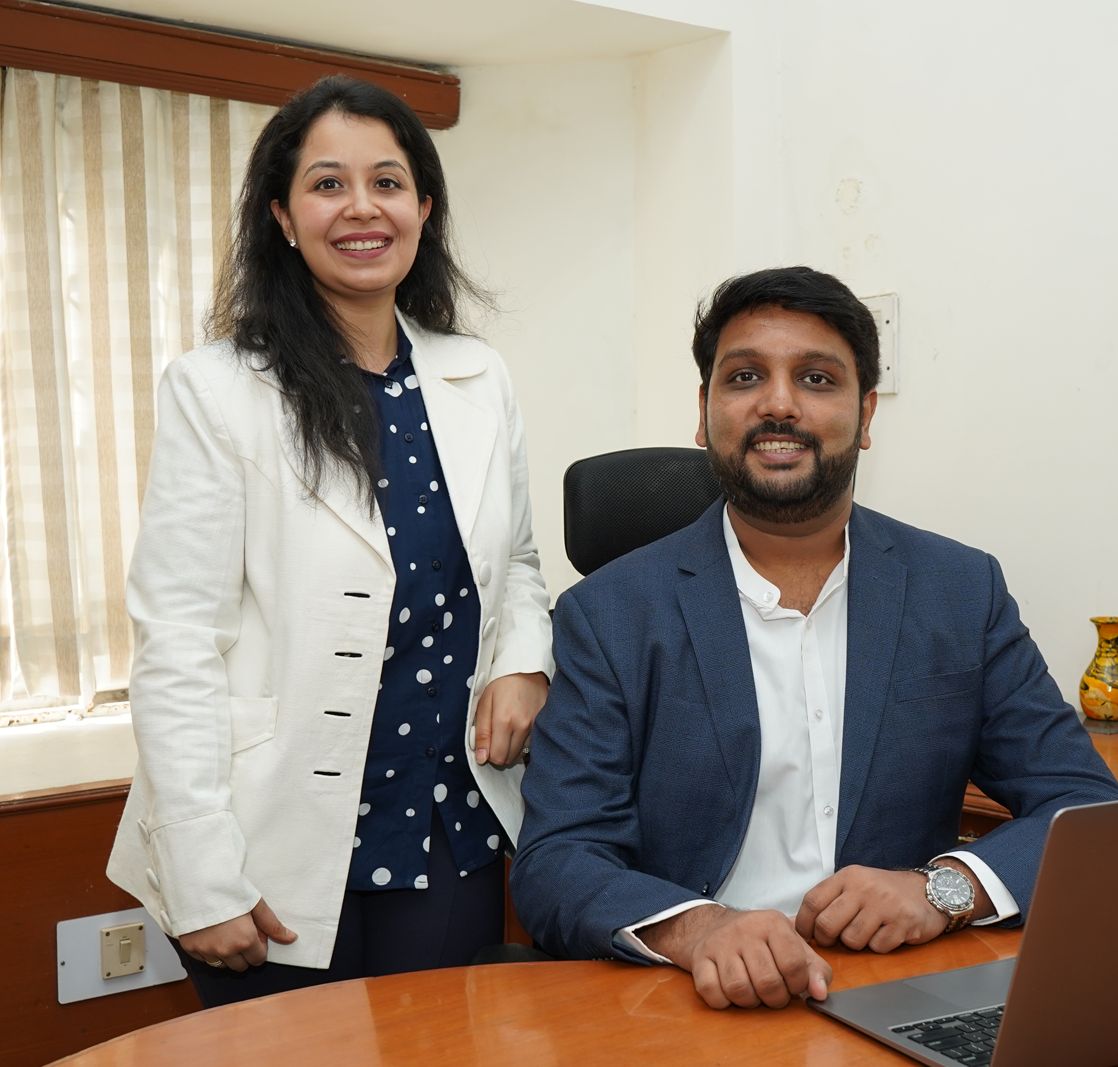
Dr. Vishesh Kasliwal, Co-founder & CEO, Medyseva Technologies Pvt. Ltd.
Dr Vishesh Kasliwal is the Co-founder and CEO of Medyseva Technologies Pvt. Ltd., a healthcare startup pioneering accessible telemedicine in India. A trained MBBS doctor with an MBA in Hospital Administration from the University of Bedfordshire, UK, Dr Vishesh blends clinical insight with healthcare systems thinking. Before Medyseva, he held senior roles at ZIO Technologies in Dubai, Arth Rural Connect, and iSmart Business Solutions, and was Vice President at Vishesh Hospital in Indore. His deep understanding of healthcare operations, gained both in India and abroad, led him to launch Medyseva in 2021 with a vision to bridge the care gap in rural India through technology-enabled, doctor-led interventions. Under his leadership, Medyseva has reached tens of thousands of patients across underserved districts, while also developing MedyVend—a first-of-its-kind remote medicine dispensing device. Dr Vishesh’s entrepreneurial journey is driven by his commitment to equity in healthcare access and impact at scale.
Dr. Rachita Kasliwal, Co-founder, Medyseva Technologies Pvt. Ltd.
Rachita Kasliwal is the Co-Founder of Medyseva and a healthcare marketing professional with over 7 years of experience in the healthcare sector. She holds a B.Com (Hons.) from Shri Ram College of Commerce (SRCC), Delhi, and an MBA in Marketing and Finance. Rachita leads brand strategy, marketing, and growth initiatives, playing a pivotal role in building scalable, patient-centric healthcare solutions across urban and rural India.
About Medyseva
Medyseva is a technology‑driven healthcare startup focused on improving access to affordable, quality & nearest medical services in India. Operating on a hybrid phygital model, Medyseva Kendras integrates telemedicine, AI‑enabled workflows, and on‑ground satellite clinics to connect patients with qualified doctors and specialists. The platform also includes verticals such as mental health, women’s health, adolescent care, nutrition, and ophthalmology.
To strengthen last‑mile medicine access, Medyseva has developed MedyVend — a Wi-Fi-enabled, doctor‑controlled remote medicine dispensing device. Together, these innovations enable continuity of care from consultation to treatment, even in remote villages.
For more information, go to: https://medyseva.com/
|
|
About Impact Investors Council:
Impact Investors Council, India (IIC) is a member-based national industry body formed with an
objective to build and strengthen the impact investing eco-system in India. To know more about our work visit https://iiic.in or reach out to secretariat@iiic.in
|
Disclaimer: Data and Information in this newsletter is made available in good faith with the exclusive intention of helping market and ecosystem players, policymakers and the public build a greater
understanding of the Indian impact investing market. The data is collated from sources believed to be reliable and accurate at the time of publication. Readers are urged to exercise independent judgment and diligence in the
usage of this information for any investment decisions
Some of the information provided in this newsletter is supplied by third parties. It is important that all users understand that third party information is not an endorsement of any nature and has been put together with the
sole purpose of benefiting stakeholders.
|
| Unsubscribe |
|
|
|