|
Enterprise Showcase
Dialogue with Ragavan Venkatesan, Founder & CEO, DGV Group
|
|
.png)
1
DGV operates as an integrated play featuring DGV Money for loan origination and DGV Connect as a digital marketplace. How do these platforms work synergistically to provide a holistic solution for the nearly one million dairy farmers currently in your ecosystem?
|
At Digivriddhi Technologies Pvt Ltd (DGV), we designed our ecosystem to solve two fundamental challenges
1. Access to Digital Finance & Insurance
2. Loan End-Use Check and Market linked loan to Value
DGV Money enables digital loan origination by connecting farmers with banks and NBFCs using data-driven underwriting. DGV Connect functions as a digital marketplace where farmers can discover and purchase various types of bovines, other categories like Feed, Equipment etc., DGV Digital Insurance is a digital platform which addresses the AI/ML based Muzzle technology for providing Health Certificates for the Bovines on the basis on Digital Bovine Index.
Together, these platforms create a closed-loop ecosystem where finance, services, and market access are integrated. This significantly reduces friction in the farmer journey while strengthening trust among lenders, insurers, and supply chain participants. By digitizing the dairy value chain, we are enabling nearly one million farmers in our ecosystem to access formal financial services while improving productivity and transparency across the sector.
|
2
With less than 1% of cattle in India currently insured, identifying and tracking animals accurately is a major hurdle. Could you elaborate on how your innovations – such as the "digital bovine index," digital health certificates, and the concept of a "Pashu Aadhaar" support more accurate underwriting and risk pricing, particularly for insurance providers and financial institutions?
|
One of the biggest bottlenecks in livestock finance and insurance has been the absence of reliable animal identity and traceability. At DGV Digital Insurance Pvt Ltd, a wholly owned subsidiary of the Parent Company (DGV), we address this through innovations such as the Digital Bovine Index, Digital Health Certificates, and the concept of “Unique Identity for Bovines.”
These solutions create a verifiable digital identity for livestock by capturing data on breed, health, productivity, and lifecycle events. Once livestock becomes a digitally traceable asset, insurers and financial institutions gain far better visibility into risk and asset quality.
This data-driven approach enables more accurate underwriting, realistic risk pricing, and faster claims validation. Ultimately, it makes Bovine insurance and dairy lending more scalable and commercially viable.
|
3
DGV has disbursed over 80 crores to date and is currently hitting 6 to 7 crores in monthly loan disbursements. As you plan to pursue your own NBFC license and explore full-stack revenue and risk-sharing models, how do you see the roles of equity raises, impact-oriented debt, and blended finance evolving to support your scaling efforts?
|
DGV has already facilitated over ₹75 crore in dairy loans and currently sees monthly disbursements of around ₹6–7 crore. As we move toward securing our own NBFC license, our capital strategy will combine equity, impact-oriented debt, and blended finance.
Equity capital will primarily fuel technology development, ecosystem expansion, and platform innovation. Impact debt will help scale credit delivery to underserved dairy farmers, while blended finance structures can help distribute risk across commercial lenders and development institutions.
This layered capital approach allows us to scale responsibly while maintaining our core focus bringing structured financial services to an unstructured but economically vital sector.
|
4
Building an integrated FinTech and Insurtech for an unstructured sector like dairy goes beyond standard compliance. As DGV developed its holistic approach, how have you approached policy integration? Could you share your experience in supporting the regulatory frameworks for rural agricultural finance?
|
Building financial infrastructure for the dairy sector requires more than technology—it requires alignment with policy and regulatory ecosystems. At DGV, we focus on developing interoperable systems that integrate with emerging digital public infrastructure while supporting compliant credit and insurance delivery.
We work closely with financial institutions, policymakers, and ecosystem partners to ensure that our platform aligns with broader goals of financial inclusion and agricultural modernization.
A key example is our work with the Unified Lending Interface (ULI) developed by the Reserve Bank Innovation Hub under the Reserve Bank of India ecosystem. Through this collaboration, we contributed significantly to integrating dairy lending workflows into the platform, including enabling models like market-linked livestock term loans.
This collaborative approach ensures that innovation in the dairy sector remains aligned with regulatory and developmental priorities while enabling scalable rural finance.
|
5
From an impact perspective, what changes have you observed in the dairy ecosystem as access to credit and insurance improves? How does the availability of financial services influence farmer resilience and income stability?
|
From an impact perspective, access to structured financial services has been transformative for the dairy ecosystem, especially because a significant portion of dairy farming in India is driven by women farmers. At DGV, we see digital finance playing an important role in creating gender-based impact by improving women’s access to formal credit.
Through our platform, farmers can access faster loan approvals with significantly reduced turnaround time (TAT), which helps address the long-standing challenge of disrupted and informal financing. This enables farmers, particularly women to invest in high-quality bovines, better feed, and veterinary care, directly improving milk productivity and income potential.
Insurance further strengthens resilience by protecting farmers against livestock loss and unexpected shocks. As access to credit and risk protection improves, farmers gain greater financial stability and confidence to invest in productivity. Over time, this contributes to stronger household incomes, improved resilience, and deeper integration of dairy farmers into the formal financial system.
|
6
DGV has played a foundational role in integrating the dairy sector with national digital public infrastructure, through RBI’s Unified Lending Interface (ULI) platform. Could you walk us through the journey of achieving this milestone and what lessons from this ULI integration can be applied to other unstructured agricultural sub-sectors?
|
A key milestone for DGV was enabling dairy lending through the Unified Lending Interface (ULI), an initiative under the ecosystem of the Reserve Bank of India.
This integration demonstrated how digital public infrastructure can unlock credit access even for traditionally unstructured sectors. By combining sector-specific data with DPI rails, we were able to streamline loan origination and improve transparency for lenders.
The broader lesson is that agriculture and allied sectors require domain-specific digital data layers. When these are integrated with national financial infrastructure, they can unlock scalable and inclusive credit systems.
|
7
Looking ahead to the next three to five years, you mentioned pioneering new asset classes focused on dairy circularity and sustainability. How will these initiatives, combined with your broader BFSI integrations, influence farmer resilience and income stability across the dairy ecosystem?
|
Over the next three to five years, DGV aims to pioneer new financial asset classes centered on dairy circularity and sustainability. This includes financing models linked to manure management, biogas generation, and climate-resilient livestock practices.
By integrating these initiatives with broader BFSI services, we aim to unlock additional income streams for farmers beyond milk production. These models will also strengthen environmental sustainability while improving farm-level economics.
Ultimately, the goal is to build a resilient dairy ecosystem where farmers benefit from diversified income, better risk protection, and deeper participation in the formal financial system.
|
|
|
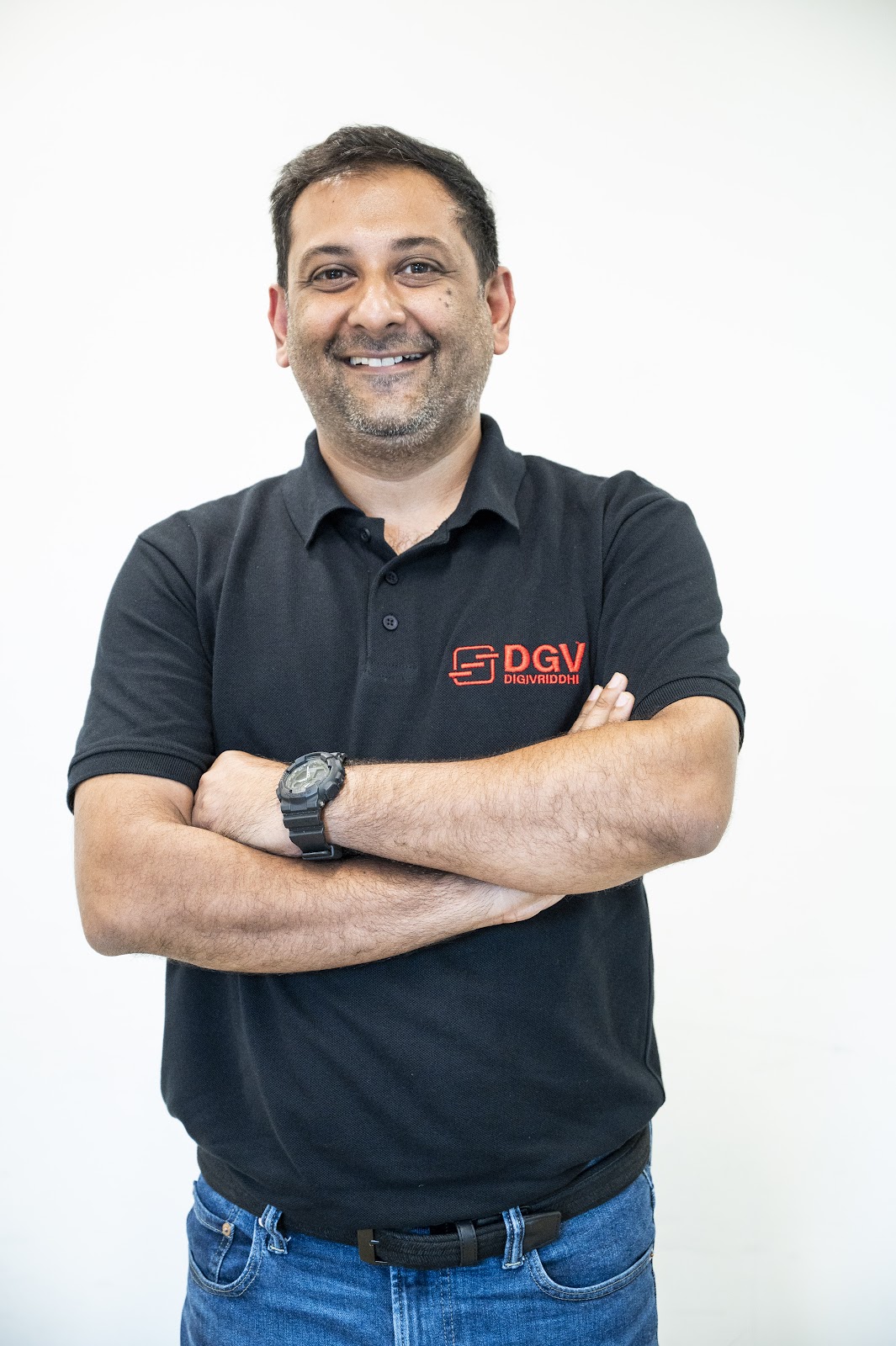
Ragavan Venkatesan, Founder & CEO, DGV Group
Mr Ragavan Venkatesan, Founder & CEO, DGV Group and Director, DGV Digital Insurance Pvt Ltd has over two decades of experience working at the intersection of technology, finance, and digital public infrastructure, contributing to the development of India’s digital payments and financial inclusion ecosystem. He was part of the initiative that built the 100,000-node Common Service Centres (CSC) network under the Government of India’s public–private partnership model, expanding access to digital and financial services in rural India. At the National Payments Corporation of India (NPCI), he led the Financial Inclusion & Government Payments vertical and worked closely with the Unique Identification Authority of India team under Nandan Nilekani to help develop the Aadhaar Enabled Payment System (AEPS) and Aadhaar Payments Bridge System (APBS), which support India’s Direct Benefit Transfer ecosystem. He later joined the founding journey of IDFC Bank, where as Business Head – Digital Payments & Alternate Channels he helped build the Assisted Digital Banking platform and scale the Bharat Banking rural franchise to 20,000 access points across 25 states. He has also contributed to ecosystem initiatives including the Direct Benefit Transfer Steering Committee at NCAER, the AEPS Steering Committee at NPCI, and the Government of India’s National Digital Payments Mission following the 2016 demonetization, and continues to engage with efforts advancing digital public infrastructure, fintech innovation, and rural financial inclusion.
About DGV Digital Insurance
DGV Digital Insurance Pvt Ltd: First of its kind digital bovine insurance platform powered by muzzle recognition and AI/ML based bovine health indexing. Each animal is assigned a unique digital ID and health certificate, verified by registered veterinary doctors, enabling transparent, tamper-proof, and data-driven insurance coverage.
For more information: https://www.dgv.in/
|
|
About Impact Investors Council:
Impact Investors Council, India (IIC) is a member-based national industry body formed with an
objective to build and strengthen the impact investing eco-system in India. To know more about our work visit https://iiic.in or reach out to secretariat@iiic.in
|
Disclaimer: Data and Information in this newsletter is made available in good faith with the exclusive intention of helping market and ecosystem players, policymakers and the public build a greater
understanding of the Indian impact investing market. The data is collated from sources believed to be reliable and accurate at the time of publication. Readers are urged to exercise independent judgment and diligence in the
usage of this information for any investment decisions
Some of the information provided in this newsletter is supplied by third parties. It is important that all users understand that third party information is not an endorsement of any nature and has been put together with the
sole purpose of benefiting stakeholders.
|
| Unsubscribe |
|
|
|