|
Capital Provider Showcase
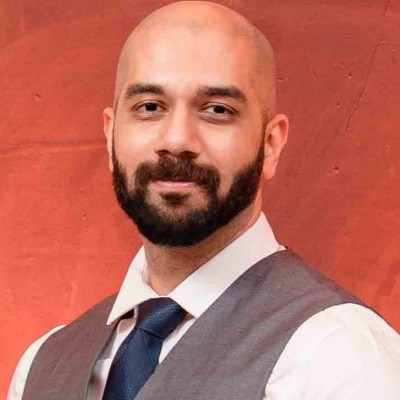
Dialogue with Prabhir Correa, Director & Head - Philanthropy, Impact Advisory & Strategic Alliances, Waterfield Advisors
|
|

1
In your experience, what are the significant shifts (if any) you’ve observed as Indian families move from episodic giving to more programmatic, outcome-driven philanthropy?
|
While there is clearly a broader cohort of Indian families engaging with philanthropy, the overall quantum of giving—particularly when viewed as a proportion of net worth—has not increased materially. For families who are actively giving, there’s a much stronger push to professionalise—thinking more carefully about outcomes, asking harder questions about what’s actually changing on the ground, and trying to move away from one-off, feel-good interventions toward tackling root causes and systemic issues.
It’s also encouraging to see funders becoming more willing to talk to each other, compare notes, and in some cases co-fund, which just didn’t happen much earlier. One downside, though, is that more family foundations are moving from being pure funders to running their own programmes and even fundraising for them. At an ecosystem level, it shrinks the pool of independent capital available to NGOs and limits flexibility in where funding can flow.
|
2
When Indian family offices engage with impact today, what tends to be their primary entry point—philanthropy, ESG-aligned portfolios, or dedicated impact investments? How has this mix evolved over the last 5–7 years?
|
For most Indian family offices, philanthropy is still very much the primary entry point into impact. There’s a fairly clear mental and structural separation between philanthropy and investing—philanthropy is seen as the vehicle for “doing good,” while investments are expected to deliver growth and returns.
That divide hasn’t really shifted in any meaningful way over the last five to seven years. Unlike in some other markets, the ecosystem here hasn’t quite matured to a point where families are comfortable genuinely blending the two approaches. You can see this in the limited participation of UHNIs and family offices in large blended-finance structures, where concessional capital, risk-sharing, and catalytic roles are key.
Even when families are investing in impact-focused enterprises, it’s often because those opportunities sit comfortably within their existing investment theses—say, healthcare, education, or climate—rather than because they are consciously trying to use capital differently to unlock social outcomes. So impact investing, for many, remains adjacent to mainstream investing, not an extension of their philanthropic strategy.
|
3
Is there a generational shift in India—particularly among next-gen family members—in how philanthropy, ESG, and impact investing are prioritised? How does this change decision-making within family offices?
|
It’s a bit of a yes and no. There is definitely greater awareness among next-gen family members—around sustainability, inequality, climate, and governance—and a much stronger sensitivity to these issues than we saw a decade ago. But that awareness doesn’t always translate, at least immediately, into a materially greater emphasis on philanthropy or socially conscious business practices.
Part of the reason is timing and context. Many next-gen leaders are stepping in at a phase where the priority is still consolidation, scale, and growth, which creates a fairly survivalist mindset—there’s a strong focus on stabilising and growing the core business before taking on broader social ambitions. In that environment, philanthropy and impact often take a back seat, or remain incremental rather than transformative.
That said, there are clear exceptions. We do see individuals who are using this generational transition to professionalise family philanthropy, bring sharper governance and outcome-orientation to giving, and push for more ethical and responsible approaches within the business itself. Where decision-making power eventually shifts, these individuals can meaningfully reshape how family offices think about capital, responsibility, and long-term value creation.
|
4
Have you seen changes in who participates in philanthropic and impact investing decisions—such as greater involvement of women, next-gen members, or professional teams—and how does this shape the nature of giving?
|
Yes, there have been some noticeable shifts in who is at the table. Women continue to play a disproportionately significant role in philanthropic decision-making within Indian families, often acting as the primary drivers of values, priorities, and long-term commitment to social causes. For a variety of cultural and practical reasons, philanthropy has remained a space where women exercise real agency and leadership.
Alongside this, we’re gradually seeing greater involvement from professional teams within family offices and foundations. As that happens, the nature of giving is becoming more structured—clearer strategies, better-defined focus areas, more rigorous diligence, and stronger attention to outcomes and learning.
While next-gen participation is increasing, its influence varies widely and is often mediated by governance structures and decision rights. Where professional teams are empowered and work in partnership with family members, philanthropy tends to move away from instinct-driven or relationship-based giving toward more deliberate, long-term, and accountable approaches.
|
5
How do expectations differ when it comes to impact measurement in philanthropy versus impact investing? Are families seeking rigorous metrics or more learning- and narrative-led approaches?
|
We’re not seeing a significant increase in impact investing by family offices, so most of the evolution on measurement is really happening on the philanthropic side. There’s been a clear shift toward paying more attention to impact measurement, largely driven by a desire to allocate capital more intelligently. Families increasingly want to know where their money is actually making the most difference and, much like with their financial portfolios, are thinking in terms of optimising social return on investment.
That said, this hasn’t translated into a uniform demand for highly technical or investor-style metrics. Many families are looking for a balance—some structure and evidence to guide decisions, combined with a deeper understanding of what’s working, what isn’t, and why. Learning has become a big part of the equation, whether that’s learning from grantees on the ground or from other philanthropists facing similar trade-offs.
|
|
|
Prabhir Correa, Director & Head - Philanthropy, Impact Advisory & Strategic Alliances, Waterfield Advisors
Prabhir Correa is a philanthropy and family office advisory professional with deep experience working with high-net-worth and ultra-high-net-worth families in India. At Waterfield Advisors, he focuses on helping families think more strategically about their giving—moving from ad hoc philanthropy to more structured, outcome-oriented approaches. His work spans philanthropy strategy, ecosystem building, and advising families on governance, measurement, and long-term engagement with social issues. Prabhir holds an MSc in Environmental Science (Low Atmospheric Carbon) and a Post-Graduate Diploma in Environmental Management from the University of Auckland, New Zealand, along with an undergraduate degree in Biodiversity Management from Unitec New Zealand
About Waterfield Advisors
Founded in 2011, Waterfield Advisors was among the first firms to offer independent, conflict-free family office advisory services in India. Today, it advises over 300 High-Net-Worth and Ultra High-Net-Worth families across eight cities, overseeing more than USD 5 billion in assets.
Operating on a fee-only model, Waterfield is compensated solely by its clients, ensuring objective advice aligned with client priorities. Its services span investments and financial planning, succession and governance, next-generation education, and philanthropy advisory.
For more information: https://waterfieldadvisors.com/
|
|
About Impact Investors Council:
Impact Investors Council, India (IIC) is a member-based national industry body formed with an
objective to build and strengthen the impact investing eco-system in India. To know more about our work visit https://iiic.in or reach out to secretariat@iiic.in
|
Disclaimer: Data and Information in this newsletter is made available in good faith with the exclusive intention of helping market and ecosystem players, policymakers and the public build a greater
understanding of the Indian impact investing market. The data is collated from sources believed to be reliable and accurate at the time of publication. Readers are urged to exercise independent judgment and diligence in the
usage of this information for any investment decisions
Some of the information provided in this newsletter is supplied by third parties. It is important that all users understand that third party information is not an endorsement of any nature and has been put together with the
sole purpose of benefiting stakeholders.
|
| Unsubscribe |
|
|
|