|
Dialogue with Pramod Rao, Former Executive Director, SEBI
|
|
1
You began your career with formal legal training, went on to work closely with large financial institutions, and later served as a market regulator. Looking back, how did each of these phases shape your thinking about capital markets, risk, and the broader public interest? Are there perspectives from one phase that you still find particularly influential today?
|
I have been quite fortunate in my career path, whether joining a large development financial institution which morphed into a large financial conglomerate anchored by the parent bank to establishing an office of a law firm in the commercial capital of the country to working at a global systemically important bank and the capital markets regulator in India. At the financial institution one raw material required in large quantities was money, and it led to a multiyear programme of issuing bonds and ensuing law reform to support shelf prospectus and information memorandum for the tranches of bonds. Similarly, the institution was at the vanguard to popularizing securitization and one got an opportunity to play a key role in developing the legal architecture for such transactions. Similarly, being involved in the domestic capital raising and listing on NYSE and a reverse merger, the novelty of which still remains, marked important influences and impact at an early stage on intersection of financial institutions and financial markets. Hence 25 years later to have an opportunity to serve at the very market regulator that governs these aspects and crucially in the very same sector - corporate bonds, hybrid securities primarily, and later equity raising via IPOs and social stock exchanges - has truly been a high point.
Issues continue to be the same. How does one balance the interests of the issuers, investors, intermediaries and markets to ensure growth, stability and measures for investor protection from market abuse or apathy in dealing with issues, concerns or grievances.
One theme which was true then and remains true now is that India needs capital to grow and sustain its people, society and economy, and such capital, whether in the form of equity, debt or hybrid capital, whether from domestic or international investors, whether from individuals or institutions, requires being encouraged, nurtured and supported.
|
2
Impact investing aims to deliver social and environmental outcomes alongside financial returns. From your experience as a regulator, how do you see the role of government and public institutions in enabling this market? What kinds of policy or institutional support are both realistic and genuinely additive, especially when viewed through the lens of “additionality”?
|
Elon Musk’s ambition aside - on humans needing to be a multi-planetary species, and which may still happen in our lifetime - as of now, we have but one planet that we reside on. We have a responsibility to those living now and the future generations that come after us, to be able to survive, sustain and indeed flourish!
Hence, having regard for our environment and for those who are less fortunate has to be an imperative.
Impact investing seeks to bridge these two imperatives. Particularly, when concepts are new or untested, equity becomes scarce, and impact investors are able to look beyond the immediate time horizon and support by providing such equity. This is high-risk investing as it requires proof of concept to be validated and then scaled. Similarly, extending debt finance may be a challenge for traditional financial providers. Impact investors are able to provide such debt at lower or even subsidized rates that allow the company to build itself up.
In fact, impact investors do and can do much more of blended finance solutions by leveraging either philanthropic funds or even government funds which target certain outcomes.
Such outcome-based financial instruments or impact-oriented financial instruments that impact investors conceive of can be combined with philanthropic objectives or government goals and can give a fillip to various types of support. Some can take the form of social impact bonds, sustainable bonds or sustainability-linked bonds, and of ZCZPs, which the Indian markets have nurtured.
A further key contribution regulators and governments can make is establishing frameworks which provide a common understanding on concepts, practices and principles underpinning ESG, which becomes a touchstone for investors, pooled investment vehicles and for the industry to align on. In capital markets, this can encompass disclosures and mechanisms which undertake trust but verify activities. For instance, auditors certify financial statements providing a true and fair view. In ESG, it can be third party assessments, second party opinions or ESG ratings providers which perform such roles.
Ensuring all assessors or assurance providers follow uniform standards, and hence allow for certified, comparable and consistent disclosures, is again a critical element. Having institutional endorsement of such uniform standards and assessors being trained or qualified to undertake such assessments are components of institutional support.
Board-based regulatory consultations and factoring in feedback from all stakeholders on the frameworks, disclosure standards, assessment standards and who the assessors or assurance providers are required to ensure all stakeholders walk lock-in-step and in sync with one another
|
3
There often seems to be a disconnect in how impact investing is understood. From a regulatory standpoint, it is frequently associated with the Social Stock Exchange, while in practice, most impact capital flows through AIFs and private markets. How can this gap in understanding be addressed so that impact investing is viewed more coherently—as a legitimate and distinct asset class—by policymakers and market participants alike?
|
One can only emphasize engagement and education as means of correcting the disconnect.
Clearly, impact investing spans a wider range of sectors, longer time frames and many will require due nurturing for the long term sustenance of such investments. A for-profit or returns-oriented approach does not and should not detract from the impact investing objective.
At some level, there is recognition that the form that impact investors have taken has been via AIFs and private markets. For instance, the Government of India has established the Research Development and Innovation Fund with a corpus of Rs 1 lac crore, which will partner with second-level fund managers, including AIFs. Similarly, the Deep Tech Fund of Funds, administered by SIDBI, aims to harness the AIFs that then fund deep tech startups.
In my view, the IIC is well positioned to be the voice of impact investing firms and should showcase and have engagements that convey the sterling level of impact investing done by its members and what more lies in store.
|
4
India has substantial domestic capital in the form of family offices, HNIs, and institutions, yet their participation in impact investing remains relatively limited. From your perspective, what are the key barriers—structural, regulatory, or even behavioural—that hold domestic investors back? What shifts in regulation, market design, or narrative could meaningfully unlock greater participation?
|
There are different items to unpack in the question you’ve asked.
For instance, institutional investors are by and large regulated by financial sector regulators such as RBI (banks and NBFCs), SEBI (Mutual funds, AIFs, FPIs), IRDAI (insurers) and PFRDA (NPS). EPFO is another large institutional investor regulated by the Ministries of Labour and Finance. These institutions would have limitations placed for one reason or another, mostly historic rather than contemporary, which act as a fetters in participation.
HNIs face constraints in terms of having to have a high sum of money to invest or be an accredited investor (with specified net worth or income) to be eligible to participate in AIFs. This, by itself, has been guided by the broad understanding in the market and for the regulator as limiting the risks to sophisticated and wealthy individuals.
Finally, family offices have been treated as extensions of HNIs and the regulatory treatment is based on the entity type used by the family.
For institutional investors, the respective regulators need to consider the need for prescribing and controlling the investment patterns that can lead to market anomalies and non-consideration of instruments or investments that are indeed beneficial for the institutions and the investors they serve. For instance, the limits around participating in InvITs that EPFO’s board places - it considers only state-sponsored InvITs to be eligible for investment. This precludes the vast majority of InvITs established in the private sector.
For both HNIs' classification and regulation of family offices warrants a debate, relook and revisit.
For instance, it’s worthy to consider whether our current definition of HNIs perpetuates the wealthy having disproportionate access to opportunities that can multiply their wealth and those below such a wealth threshold not even being shown such opportunities. Of course, a counter view is whether the individuals have risk appetite since there can be a possibility of capital loss, and hence only having wealth above a specified threshold
ensures that only those with a tolerance & capacity for capital loss should be given the access. Of course, if one could restate and limit loss-taking ability to perhaps 5% or 10% of net worth, that makes it more democratized access to the opportunities while limiting the downside risk.
Similarly, family offices warrant a special and distinct treatment and debate on instituting a regulatory regime should occur. If it’s designed as voluntary and for a very high level of funds managed by the family office initially, it could be a start to seeing if it’s aiding or constraining family offices.
|
5
During your time at SEBI, you were closely involved in introducing and overseeing new market structures and regulatory frameworks. What lessons from that experience stand out when it comes to mainstreaming new ideas that require changes in investor mindset and institutional behaviour? How might those lessons apply to scaling impact investing in India today?
|
One had the opportunity to introduce several new market intermediaries and regulatory frameworks including the online bond platforms, ESG Rating Agencies, Small & Medium REITs, and corporate bond repo platform, and changes to the frameworks for corporate bonds, municipal bonds, REITs and InvITs with a view to strengthen investor, issuer and intermediaries involved and aid the growth and development of the capital markets.
The key lessons I would draw out are:
-
Consultation processes are mandated and undertaken by the financial sector regulators. However, participation by industry, investors or intermediaries is often quite low in such consultations compared to the impact the changes or reforms can have on them. Many times, the feedback starts to occur when the reform or new regulations are announced as approved or upon being notified.
-
The number of consultations held, especially by SEBI come in for criticism as well. The fact is that the extent of intermediaries and items of regulation are so vast, aggregating perhaps 25+ intermediaries and at least 8-10 topics which impact intermediaries and listed companies, that it feels too much! However, such changes and consultations are usually triggered by one stakeholder or another (including media reports on investor sentiments) and not suo motu.
-
Regulations introducing a new product, instrument or intermediary should retain the flexibility to deal with feedback or concerns or issues flagged when being implemented. This signals humility that all issues may not have been addressed, and a clear indication to the market and stakeholders of willingness to listen and attend to issues when rolling out a new proposal.
|
6
India is sometimes seen as less competitive than certain African markets in attracting global impact capital, despite its scale and depth of opportunity. In your view, what drives this perception? What could India do differently to attract more international impact capital while maintaining regulatory discipline and accommodating the realities of a large, fast-growing economy?
|
My sense is that India is a vast country; in its land mass, population and initiatives may get subsumed in its vastness. Smaller nations are possibly more likely to show the visible difference that the impact investment has made.
We should do more to showcase what has been achieved, both in terms of impact and of returns, and the potential which are available. To my mind, akin to how the World Economic Forum has made Davos a destination, IIC can aspire to be such an institution that showcases the achievements and opportunities, fosters debate and dialogue, and encourages impact investment initiatives in India.
Opportunities that leverage technologies, recognize that scaling is not to a few millions but for billions, and that sustainable development is an imperative, are what can be showcased to attract innovators and investors from around the world.
|
7
India’s development narrative increasingly emphasises the role of private capital in nation-building. How do you see impact investing aligning with initiatives such as Make in India and Atmanirbhar Bharat? Can impact capital play a more intentional role in strengthening domestic value chains, supporting MSMEs, and generating employment? What needs to be in place for this to happen at scale?
|
In our march towards Viksit Bharat, or a developed nation status, all engines of growth need to be firing on all cylinders, and impact investors are very much part of such an engine of growth.
Perhaps impact investors are much more aligned with the objectives of the government which aims at Sabka Saath Sabka Vikas i.e. all of us progressing together, and the themes of Atmanirbhar Bharat i.e. self-sufficient India, and Make in India initiatives, given the economic, social and sustainable development that both aspire to support.
Impact investors can certainly fuel MSMEs, aid generation of employment opportunities and give impetus to domestic value chains.
Investing in initiatives that are population-scale, address board swaths of societal needs (clean water, clean energy, transport, logistics and infrastructure) and leverage available technologies are the drivers that will allow impact investors to make returns and impact in meaningful ways.
|
|
|
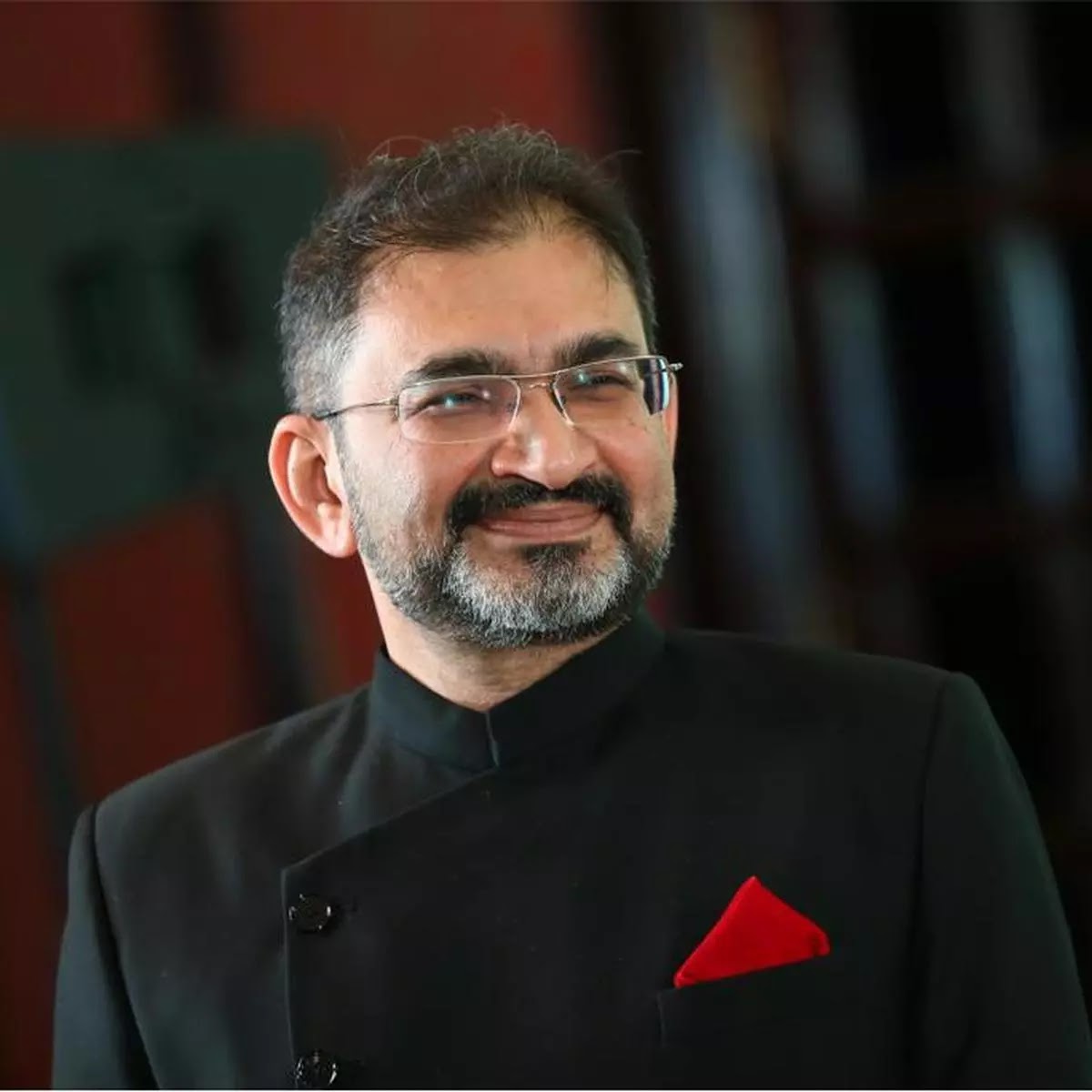
Pramod Rao, Former Executive Director, SEBI
Pramod has extensive experience spanning the Indian financial services sector, having served
at SEBI, ICICI group, Citigroup and IndusLaw.
At SEBI, Pramod served as an Executive Director overseeing Corporation Finance Department,
Department of Debt & Hybrid Securities, and Inter-regulatory Interface group. During his tenure,
he also led Enquiries & Adjudication Department & Quasi-Judicial Cell, Enforcement Department, Department of Economic & Policy Analysis & also acted as a quasi-judicial authority. He also was a member of IFSC Authority, National Financial Reporting Authority, various forums constituted by or under the Financial Stability & Development Council, IOSCO committees & Advisory Council of IFRS Foundation.
Presently, Pramod is serving as a member of the Standing Committee on Primary Markets
constituted by IFSC Authority, member of the Committee to Formulate Guidelines or
Regulations under NPS to enable Framework for Assured Payouts as per the PFRDA Act
constituted by PFRDA. He also works with Finternet Labs (FinternetLabs.io) as a legal & regulatory advisor building on his experience in contributing to the development of digital public infrastructure through iSPIRT projects including Sahay-GeM, Sahay-GST & the Sahamati AA Ecosystem as well as ONDC. He has played a pivotal role in conceptualizing & adoption of online dispute resolution (ODR) for the BFSI sector and within the Indian securities market in the form of SmartODR.in. He provides strategic legal and regulatory advice to several commercial enterprises and entrepreneurs in the Indian financial services sector. He can be reached at: email(dot)pramod(dot)rao(at)icloud(dot)com and is at http://linkedin.com/in/pramod-rao-lawyer
|
About Impact Investors Council:
Impact Investors Council, India (IIC) is a member-based national industry body formed with an
objective to build and strengthen the impact investing eco-system in India. To know more about our work visit https://iiic.in or reach out to secretariat@iiic.in
|
Disclaimer: Data and Information in this newsletter is made available in good faith with the exclusive intention of helping market and ecosystem players, policymakers and the public build a greater
understanding of the Indian impact investing market. The data is collated from sources believed to be reliable and accurate at the time of publication. Readers are urged to exercise independent judgment and diligence in the
usage of this information for any investment decisions
Some of the information provided in this newsletter is supplied by third parties. It is important that all users understand that third party information is not an endorsement of any nature and has been put together with the
sole purpose of benefiting stakeholders.
|
| Unsubscribe |
|
|
|