|
Capital Provider Showcase
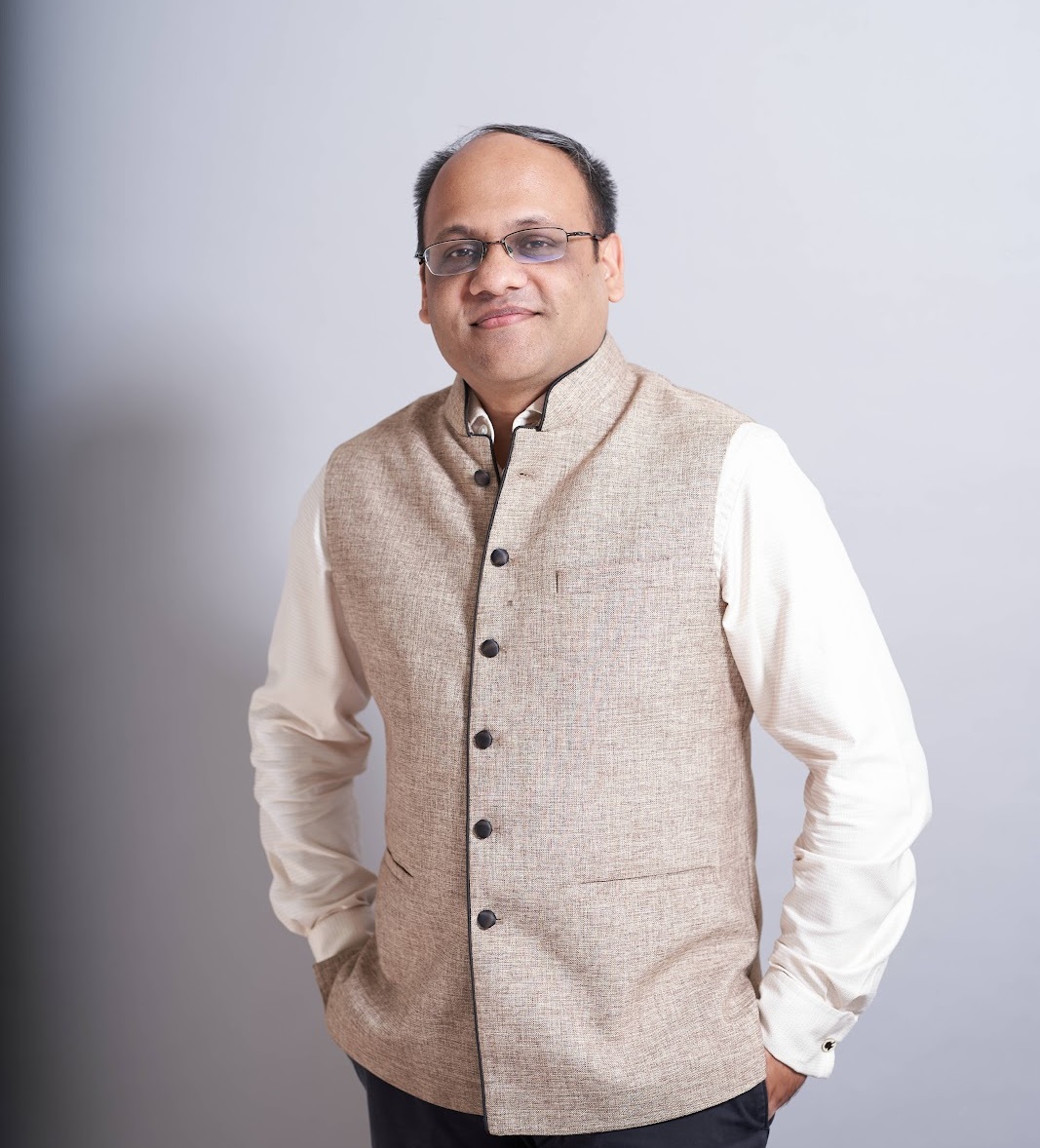
Dialogue with Anurag Agarwal, Partner, Aavishkaar Capital | Harsh Kherajani, Investment Associate, Aavishkaar Capital
|
|

1
Aavishkaar Capital has been central to India’s financial inclusion story for nearly two decades. How has your approach evolved—from early microfinance-led models to today’s technology-enabled, integrated financial services ecosystem?
|
Aavishkaar’s journey began by adapting venture-style risk-taking to microfinance and early-stage rural enterprises. Over the last decade, we have progressively moved up the maturity curve by layering stronger governance, sector expertise, and new vehicles (growth equity + credit funds) to back high-growth, technology-enabled finance players that combine product innovation with distribution scale. We still prioritize underserved geographies and segments, but now we also pair that with digital operational playbooks to amplify our reach and returns.
|
2
India’s financial inclusion landscape has transformed with digital public infrastructure, fintech innovation, and regulatory changes. How have these shifts influenced your investment thesis and portfolio construction?
|
India’s financial inclusion journey has accelerated with digital public infrastructure, fintech, and new regulations, expanding access to credit and digital payments for underserved segments. For Aavishkaar Capital, this transformation deepened the focus on backing businesses that use UPI, Aadhaar, and digital lending to serve low-income groups and MSMEs. The investment thesis now prioritizes scalable, tech-led models bridging gaps in microfinance, MSME, affordable housing loans and insurance with measurable impact. Portfolio construction is increasingly driven by companies that not only deliver financial products but also build financial resilience and inclusion at scale. The result is a more innovation-oriented, impact-focused portfolio targeting real systemic change in financial access across India.
|
3
Aavishkaar has pioneered fund structures that blend commercial and catalytic capital to reach underserved markets. Could you highlight one such structure you championed, and how it balanced inclusion objectives with investor expectations?
|
One structure we’re proud of is the way our funds were designed to support companies from their earliest days all the way to IPO. We have been early backers of Utkarsh SFB, Suryoday SFB, CreditAccess Grameen and Equitas SFB when they were small MFIs serving rural, first-time borrowers. Our early funds provided the high-risk, catalytic capital they needed to prove their model. As they grew stronger, our later and newer funds wrote larger cheques that helped them become NBFCs, Small Finance Banks and eventually get listed on public exchanges. This allowed us to stay committed to inclusion while still delivering outcomes that mainstream investors expect.
|
4
Aavishkaar has backed several pioneering enterprises that have advanced financial inclusion across rural and semi-urban India. Drawing from your portfolio—including innovations like EFL’s psychometric and alternative-data underwriting—could you share a few examples that best illustrate how new business models and credit-assessment approaches are expanding formal finance for underserved, thin-file, and new-to-credit customers?
|
Over the years, Aavishkaar Capital has backed several enterprises that are not merely extending credit, but redefining how credit is extended to underserved customers including thin-file, new-to-credit segments, and semi-urban/rural MSMEs. For instance, EFL uses machine data, usage metrics, and equipment cashflows rather than traditional collateral alone, which enables them to serve borrowers who might not have long credit histories or standard bank collateral.
On the microfinance side, Arohan has shifted from paper-heavy processes to digital loans, using mobile KYC, cash-flow-based scoring and instant approval workflows, which dramatically reduce turnaround time for rural women borrowers.
Another powerful example from our portfolio is Utkarsh SFB: we backed it initially in the form of a micro-finance institution, it transitioned to a Small Finance Bank domiciled in Varanasi and now offers full banking services to underserved and rural segments — effectively turning frontier credit access into full-service finance.
On the housing side, Altum Credo shows how you can give non-salaried, first-time home-buyers in semi-urban India long-term financing via smaller-ticket loans (₹8.5 lakhs avg) and a tech-enabled underwriting engine — removing typical barriers for new-to-credit customers.
Together, these models show how smarter data, contextual underwriting and digital journeys are bringing formal finance to customers who were previously invisible to the system.
|
5
Despite sector maturity, challenges persist—last-mile cost, digital trust, and perceived investor risk. Which barriers remain most binding, and how are you working with partners or co-investors to address them?
|
Our thesis for investing in Financial Inclusion exactly targets these 3 issues. We view these challenges in the below manner: First, last-mile cost — serving rural and volatile-income customers still requires human touchpoints, which digital tools alone can’t replace. Second, digital trust — many first-time users still need guided onboarding and handholding before they are comfortable with fully digital journeys. Third, perceived investor risk — early-stage lenders in low-income segments often face higher capital costs despite strong fundamentals.
We are trying to address this by supporting phygital distribution models, investing in better customer-protection and grievance frameworks, and using co-investor syndications to de-risk early scale. The goal is simple: reduce cost, build trust, and create confidence so more capital flows into inclusion.
|
6
Looking at your pipeline today, what excites you most? Are you doubling down on proven models or exploring frontier segments such as insuretech, embedded finance, livelihood finance, or climate-linked financial services?
|
What excites us most today is the next wave of financial-inclusion - models that are not just digitizing workflows, but using AI, alternative data and automation to fundamentally rewrite the economics of serving underserved customers. Collections remain one of the most difficult cost-lines in last-mile finance. Aavishkaar is tracking collection-tech platforms closely and believes that this segment, which is dominated by traditional methods, is ripe for disruption. Lower collection costs make smaller-ticket inclusion loans commercially viable — especially where incomes are volatile and repayment journeys require more personalized support. Considering we have already backed two proven lending models from the current fund, we are looking to partner with emerging models that can drive financial inclusion in a non-linear fashion.
|
7
As you look toward the next decade of Aavishkaar’s journey, what does the future of financial inclusion look like? What will it take—from policymakers, investors, DFIs, and innovators—to move from access to true financial equity?
|
Over the next decade, financial inclusion will shift from merely providing people with access to accounts or credit to ensuring they have fair, affordable, and reliable financial tools that genuinely improve their lives. This will require stronger digital public infrastructure, clearer consumer protection norms, and regulations that support innovation without compromising trust.
Investors and DFIs will need to bring more patient, blended capital to make last-mile economics viable. Innovators must focus on AI-led underwriting, better risk models, and hyper-local distribution to serve customers who remain invisible to traditional finance.
And most importantly, the ecosystem must work together so that underserved households don’t just enter the system but can meaningfully participate and build financial resilience.
|
|
|
Anurag Agarwal, Partner, Aavishkaar Capital
Anurag is a Partner at Aavishkaar Capital which is the Impact investing arm of Aavishkaar Group. Anurag has been part of the founding team of Group Company, Intellecap and last served as its CEO. He set up and built the Company's Investment Banking Practice with a specific focus on assisting early and growth-stage multiple bottom-line enterprises to raise capital. In addition to serving on the Board of the Group Holding Company, Anurag represents the Promoter interest on the Board of Group Companies Arohan and Ashv as well as Aavishkaar Portfolio Companies - Nepra, Newtrace, Altum Credo, Electronica Finance and EPS.
Harsh Kherajani, Investment Associate, Aavishkaar Capital
Harsh is an Investment Associate at Aavishkaar Capital and has over 4 years of growth equity investing experience. He has spent significant amount of time investing in high impact themes across financial inclusion, climate tech and evolving consumer priorities. He is a Chartered Account, a Lawyer and has also cleared CFA.
About Aavishkaar Capital
Aavishkaar Capital is a leading impact-focused investment firm backing early- and growth-stage enterprises across India, Emerging Asia, and Sub-Saharan Africa. The firm invests in high-potential businesses in sectors such as financial inclusion, agriculture, climate solutions, and essential services. With a track record spanning two decades, Aavishkaar Capital has raised 8 funds, mobilised significant domestic and global capital, and consistently delivered both strong financial performance and measurable social impact in underserved markets.
For more information, go to: https://aavishkaarcapital.in/
|
|
About Impact Investors Council:
Impact Investors Council, India (IIC) is a member-based national industry body formed with an
objective to build and strengthen the impact investing eco-system in India. To know more about our work visit https://iiic.in or reach out to secretariat@iiic.in
|
Disclaimer: Data and Information in this newsletter is made available in good faith with the exclusive intention of helping market and ecosystem players, policymakers and the public build a greater
understanding of the Indian impact investing market. The data is collated from sources believed to be reliable and accurate at the time of publication. Readers are urged to exercise independent judgment and diligence in the
usage of this information for any investment decisions
Some of the information provided in this newsletter is supplied by third parties. It is important that all users understand that third party information is not an endorsement of any nature and has been put together with the
sole purpose of benefiting stakeholders.
|
| Unsubscribe |
|
|
|