|
Capital Provider Showcase
Dialogue with Mr. Purna Mohanty, Technical Lead – Sanitation, Policy & Technical Support Unit, WaterAid India
|
|
.png)
1
How has WaterAid’s strategy evolved from direct service delivery to long-term systems strengthening, especially in the context of the SDGs and the shift toward locally led, climate-adaptive WASH approaches?
|
Historically, WaterAid focused on delivering water, sanitation and hygiene (WASH) services directly through community projects and behaviour-change programmes. These projects built local uptake and demonstrated proof of concept. Programmatic learning showed that isolated service delivery often did not sustain at scale unless the surrounding systems (local government, finance, monitoring, markets, accountability) were stronger. That led WaterAid to pilot programs explicitly focused on the “service delivery for influencing” idea — using local projects to test scalable models and influence policy and practice. WaterAid’s current Global Strategy explicitly positions the organisation as a catalyst that supports universal, safe, sustainable WASH by strengthening whole systems (governance, financing, planning, monitoring, markets and accountability) rather than only delivering discrete hardware projects. This is a strategic reorientation toward district / national systems and influence to achieve SDG-6 at scale. WaterAid has also published guidance and tools to integrate climate resilience into WASH system strengthening (climate risk analysis, resilient technologies, and planning). This means designing systems that anticipate droughts, floods, temperature stress and water-resource shifts rather than only building standard infrastructure.
|
2
With climate change intensifying water stress, how is WaterAid embedding resilience into its WASH programming — through technology innovation, resource management, and institutional capacity-building?
|
In its Programme Guidance for Climate-Resilient WASH, WaterAid explicitly supports technical designs that build in redundancy and resilience, for example: hybrid-powered water-supply systems (solar with grid or backup), more storage (tanks, rainwater harvesting) to buffer against droughts or erratic rainfall. WaterAid advocates for real-time or near-real-time monitoring of climate-sensitive parameters. For example, working with communities and local governments to monitor groundwater and rainwater levels, informing decision-making. Specifically, in India, WaterAid India has developed a practical guide for resilient facilities in flood-prone & water-logged zones: elevated water points, high-raised household water taps, and resilient sanitation (e.g., biodigester toilets, raised twin leach-pit toilets, evapotranspiration toilets, etc.). WaterAid’s climate-resilient approach is not just about infrastructure — we integrate WASH with broader water resource management. This means working at the watershed or aquifer level, considering competing users, recharge, and sustainable abstraction. As part of resilient design, WaterAid promotes water storage for communities: above-ground tanks, rainwater harvesting, and managed aquifer recharge to maintain water supply during dry spells. WaterAid also emphasises safe management of faecal waste in the face of flooding: more frequent emptying of pit latrines before floods, strengthening wastewater treatment capacity to avoid contamination when systems are overwhelmed.
|
3
Given WaterAid’s close engagement with public institutions and policymakers, how does it shape WASH priorities within government systems? Could you highlight a policy or regulatory shift where WaterAid’s advocacy played a defining role?
|
WaterAid uses its field experience (pilot projects, service models, climate-resilient technology) to generate evidence, which it packages as policy briefs, technical reports, and recommendations. These feed into national planning. WaterAid works with governments to assess gaps in sector governance (financing, regulation, monitoring) and recommends system reforms. WaterAid also conducts studies & research to influence policies as well as strengthen the resilient WASH programming, and the recent one can be accessed through: https://www.wateraid.org/in/publications/safeguarding-wash-services-in-the-era-of-climate-change.
Regarding influencing the policies, in India, WaterAid has developed a water quality surveillance roadmap for the Government of Madhya Pradesh, since water quality is often impacted by climate change. As both thematic as well as state lead under Rural WASH Partners Forum of Department of Drinking Water and Sanitation (DDWS), Ministry of Jal Shakti, Government of India, WaterAid has extensively supported the Government across three areas:
- Grey Water Management.
- Operation and Maintenance of Rural Pipe Water Supply.
- WASH in Institutions and Gender.
|
4
As the SDG deadline nears, what remains the toughest barrier to universal WASH access — financing, governance, or inclusion — and how is WaterAid adapting its model to overcome it?
|
In India, despite being greatest political will towards universal access to WASH, there are three challenges still pertaining:
- Reaching the last mile – ensuring service delivery to the population residing in the hard-to-reach areas,
- Sustaining the service – ensuring the available WASH facilities are sustainably functioning throughout the year,
- Dealing with emerging challenges – climate change and related disasters being quite often, the WASH sector is one of the first victims and making the existing WASH facilities climate and disaster resilient is a challenging task.
To address the challenges, WaterAid India has been constantly trying to pilot resilient models, conduct studies and research to generate evidence and influence policies, starting from communities to the national level on all aspects.
|
5
How does WaterAid ensure equitable WASH access for women, people with disabilities, and marginalized communities? What frameworks guide the organization’s accountability and measurement of long-term outcomes?
|
We do capture gender- disaggregated data in our MIS. Inclusion of marginalized group, such as women, people with disabilities, economically and socially excluded, is a core part of our planning and implementation processes. We have established guidelines and standards that ensure vulnerable groups, particularly women and girls, people with disabilities, and marginalized communities gain equal access to WASH services. We use an Equity & Inclusion Framework to guide planning, identify exclusion risks, and design accessible infrastructure, such as gender-sensitive toilets and disability-friendly facilities. We place special emphasis on supporting communities in socially or geographically marginalized areas, including climate vulnerable geographies and informal settlements. It also includes behavior-change campaigns to shift harmful norms, research and policy advocacy to influence governments, and systems strengthening to ensure long-term sustainability.
|
6
What institutional mechanisms guide WaterAid’s capital allocation across its WASH initiatives? How does the organization ensure transparency, fiduciary discipline, and donor alignment while maintaining local responsiveness?
|
We have a robust internal control systems to ensure financial compliance which includes internal audits, enhanced whistleblower protection and reporting mechanisms.
We hold quarterly meetings of Board members who are fully briefed about the important updates including budget and expenditures, organizational results and ensure programs deliver with the intended impact. The quarterly Program review meetings are also held with Program and finance to evaluate progress against planned target, identify challenges and opportunities, and ensure all efforts contribute to the impact at community level. Regular updates are also shared with our global donors and the WaterAid federation to maintain transparency.
|
 1.jpg)
A woman carries water pots while holding her child in Dindori, Madhya Pradesh, reflecting the everyday realities of water accessibility that women shoulder.
Photo credit: Pause Photography / WaterAid India.
|
|
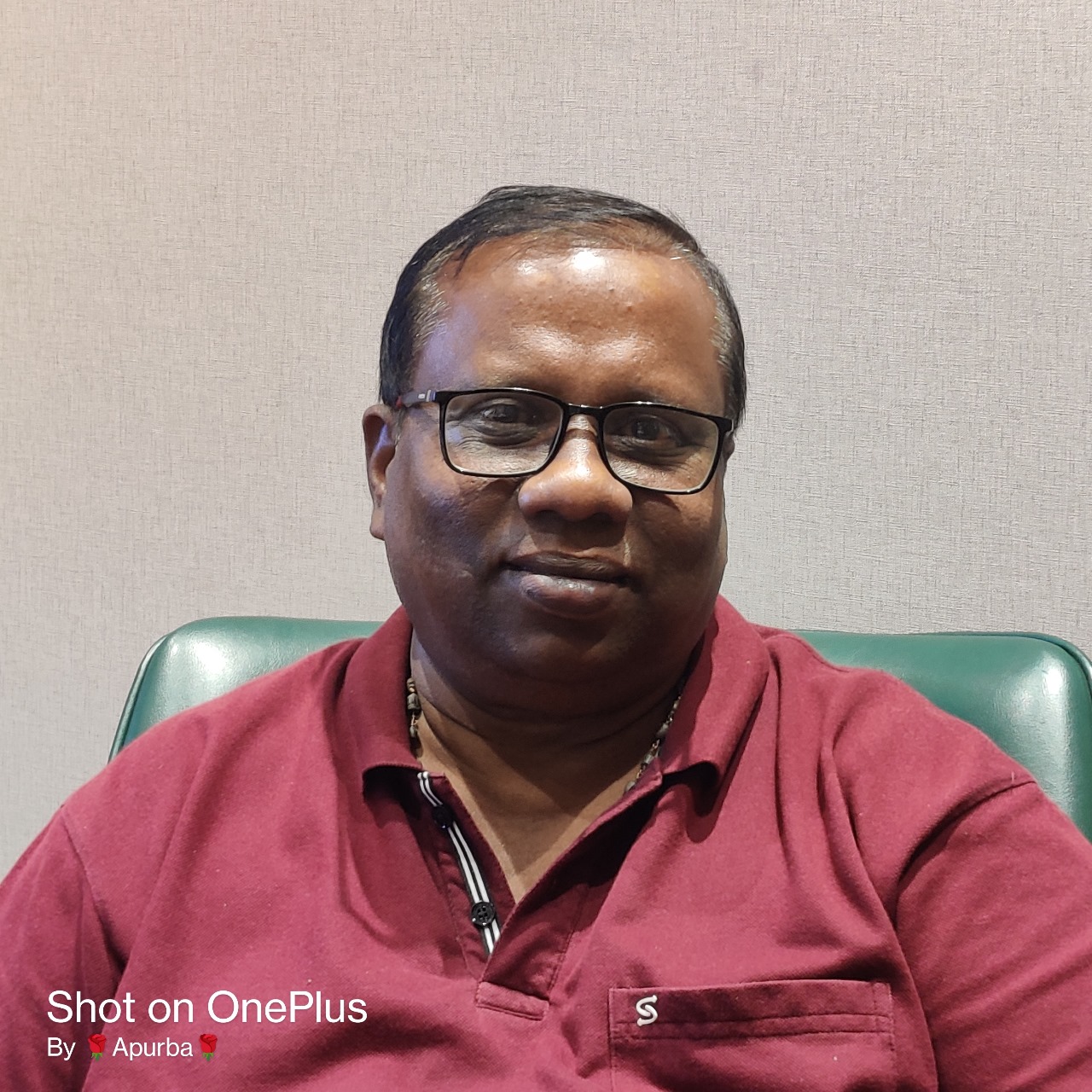
Mr. Purna Mohanty, Technical Lead – Sanitation, Policy & Technical Support Unit, WaterAid India
Mr. Purna Mohanty is the Technical Lead - Sanitation in the Policy & Technical Support Unit at WaterAid India, with over 25+ years of experience in WASH sector. A strong advocate for universal design, inclusivity, and accessibility, Mr. Mohanty ensures infrastructure and home adaptations serve persons with disabilities and vulnerable groups. He strengthens long-term program sustainability through robust community engagement. As a skilled policy influencer, he contributes to sectoral innovation, and is an accomplished author on topics like groundwater, disability-inclusive WASH, and disaster-resilient programming.
About WaterAid
WaterAid in India (WAI), operating as the Jal Seva Charitable Foundation (JSCF), has worked for almost four decades to improve access to safe drinking water, sanitation, and essential hygiene (WASH) services in India. WaterAid’s core mission is to deliver innovative, community-driven solutions for WASH challenges, especially for underserved and marginalised communities. Our operating model is based on collaboration with the government, formal and informal organisations at a community level, civil society, and private sector stakeholders to create scalable and impactful solutions. WaterAid focuses on empowering communities, fostering leadership, and building local ownership to ensure the long-term sustainability and climate-resilience. WaterAid is working in 10 States, 40 Districts,537 Gram Panchayats, 1,209 Villages and 7 Towns. In 2024-25, WaterAid India implemented 42 projects in 10 states.
WaterAid India exists to ensure that no one is left behind in accessing clean water, improved sanitation, and hygiene, creating a healthier, equitable, and a more sustainable future for all.
For more information, go to: https://www.wateraid.org/in/
|
|
About Impact Investors Council:
Impact Investors Council, India (IIC) is a member-based national industry body formed with an
objective to build and strengthen the impact investing eco-system in India. To know more about our work visit https://iiic.in or reach out to secretariat@iiic.in
|
Disclaimer: Data and Information in this newsletter is made available in good faith with the exclusive intention of helping market and ecosystem players, policymakers and the public build a greater
understanding of the Indian impact investing market. The data is collated from sources believed to be reliable and accurate at the time of publication. Readers are urged to exercise independent judgment and diligence in the
usage of this information for any investment decisions
Some of the information provided in this newsletter is supplied by third parties. It is important that all users understand that third party information is not an endorsement of any nature and has been put together with the
sole purpose of benefiting stakeholders.
|
| Unsubscribe |
|
|
|