|
Enterprise Showcase
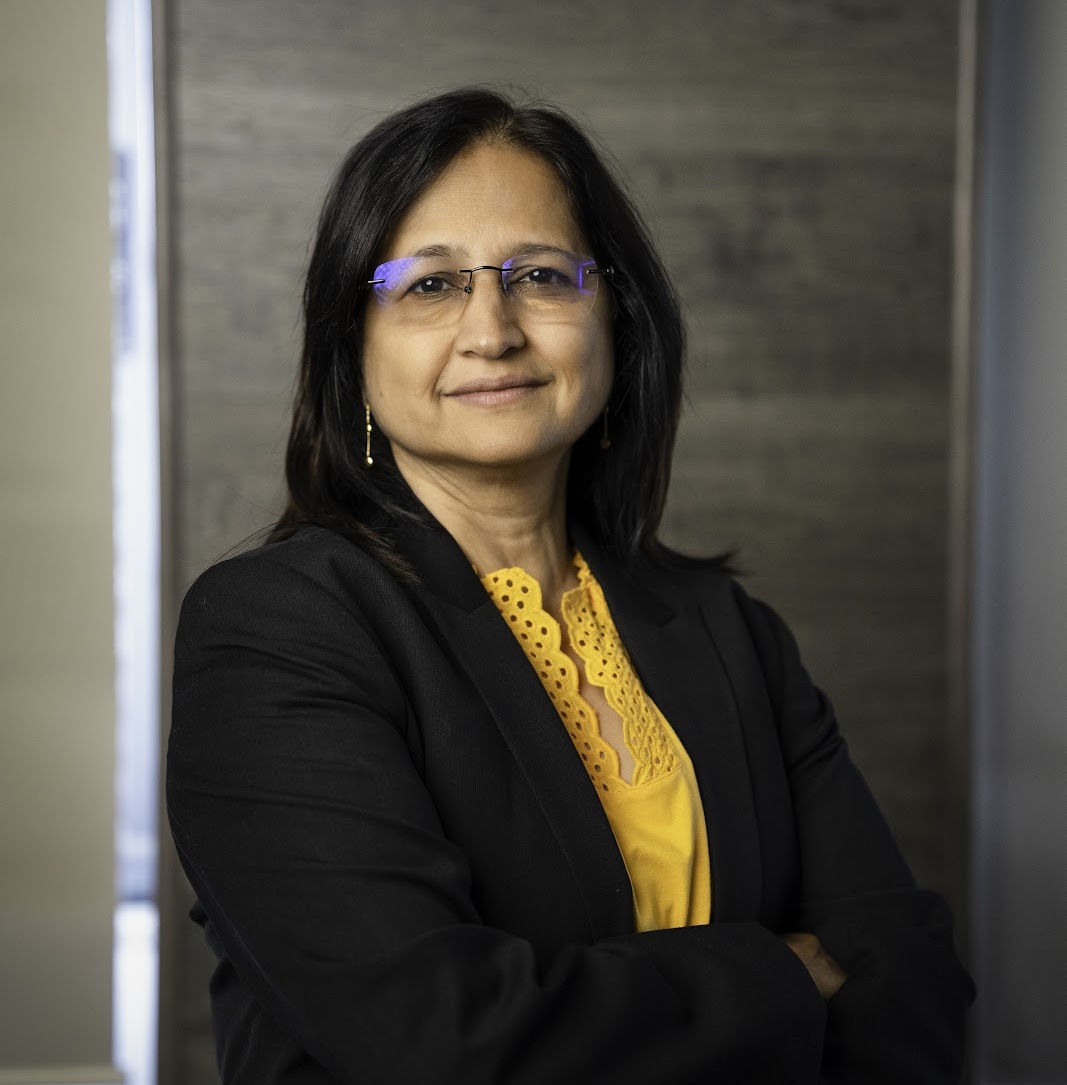
Dialogue with Ms. Shilpa Pophale, MD, Electronica Finance Limited
|
|

1
EFL has been part of India’s MSME landscape for over three decades. Could you walk us through the organisation’s journey—how its founding vision took shape, and how that mission has evolved as MSME financing itself has transformed?
a. What were the most significant structural gaps in access to finance for MSMEs, and how have those changed over time?
|
It all started with our founder’s vision. At the time, Electronica Group was solely into manufacturing, serving MSMEs with their capital equipment needs. But our founder, Mr. S. R. Pophale, had a very holistic view when it came to serving the customers: he noticed that one of the pain-areas of the MSMEs was securing finance for the machines they were trying to purchase. Hence EFL began, as another experiment, and as another result of our customer centricity. Leveraging the expertise the Electronica Group had in the manufacturing industry, we were able to develop a unique method of credit assessment of our customers. This expertise turned into our USP: no other player in the market was doing it.
EFL has grown through the years, and our expertise, along with our portfolio has grown outside the engineering industries. Holding true to Mr. S. R. Pophale’s view of customer centricity, we have developed a unique, holistic methodology of assessing not only the machine value, but the financial and business health of the customer in the MSME segment. We also identified industrial loans against properties as another need of these customers. With the same sentiment, we have diversified into many industries, and have been pioneers in offering innovative products, such as machine finance and rooftop solar finance. We make sure that our products align precisely with the requirements of our customers. This approach has evolved with the question, “what do our customers need, even though they may not know they need it?”
The manufacturing MSME sector has grown. The segment has become more formal and more organized. We have seen this growth, and take immense pride in saying we have been part of this growth story. But our mission has not changed. We are here to serve the MSMEs of India. To that effect, we have broadened our horizons into serving smaller MSMEs in semi-urban areas in Gujarat, Rajasthan, Madhya Pradesh and Telangana.
|
2
Over the years, EFL’s product suite has diversified considerably. How do you see the balance today between traditional asset finance, working-capital solutions, and newer, more technology-enabled offerings?
a. In your view, which product or financing model has created the greatest depth of impact for MSME clients.
|
Yes, it is certainly true that we have diversified considerably. We have not only grown by tapping into more industries and segments, but also by diversifying our product mix. Like I said, this has been fueled by our desire to serve the customers with all that they might need. But it is not as altruistic as it sounds! We have diversified, because like any business, any person, any living thing, we want to grow. But even with all the diversification, our core strength still remains asset finance. We believe that in the larger scheme of things, it is in our interest, (as well as in our customers’ interest) to fund responsibly. This responsibility lies with the financier to the ensure repayment capacity of the customer. With machines finance, we ensure the purchase is justified, the quality of the asset is good, and the customer is going to grow their income after installing that machine. This ensures a healthy portfolio. In addition, we offer products such as working capital against existing machines, loan against property, debt consolidation, and rooftop solar finance, among others. Except for cash credit which is banks’ forte, we offer the entire suite of lending solutions an MSME may need.
With technology, especially with machine-learning and automation, we are able to assess better and faster. We are able to take more ‘traditionally’ risky decisions, because the risk is calculated more precisely, allowing us to in fact to reduce our risk in the long run. This new approach will certainly shift our product mix a little away from the traditional asset finance. However, I believe machine finance will still remain our core strength, considering the growth in manufacturing segment in India. It is also the product that has created the greatest impact for our MSME customers, because funding asset creation elevates the customers not only in terms of turnover growth, but also in terms of their financial eligibility.
|
3
Measuring progress for MSMEs can be complex. What internal frameworks or indicators help EFL understand whether its financing is truly enabling enterprise growth and resilience? (Including digital tools)
|
That’s a good question. I have already answered it partially, but our expertise, and out experience of over three decades allow us to see what others cannot. We are able to accurately predict the value of the asset our customer wants to purchase, or has already purchased. But in addition to that, we have hundreds of different indicators, and data points that we capture while assessing and underwriting. To gauge some of these, A.I. and automation will definitely be useful. And we embrace all technological innovations and data science solutions that enhance our efficiency, and our customers’ access to credit. But for some of the indicators we assess, it might not be feasible due to their qualitative, nuanced, and informal nature. That is when our intuitive understanding of the industrial segments, and our own experience comes into play. But ultimately, a balanced and responsible approach in lending while also considering the customer’s needs and repayment ability allows us to ensure our own growth and resilience.
|
4
MSME lending often sits at the intersection of opportunity and risk. How has EFL’s approach to credit assessment evolved, and what role does data science or behavioural insight play in improving underwriting quality?
a. What are the toughest credit cases you see, and how do you evaluate them? Do you use alternate data, machine learning, field scoring, or other non-traditional underwriting tools?
|
I would argue all businesses sit at the intersection between opportunity and risk. But yes, it is explicitly the case with lending. The MSMEs of India contribute 30% to India’s GDP. This contribution is being made by 7 crore individual businesses. So opportunities are abundant. The key lies, like you said, in credit assessment while considering the relatively unorganized nature of MSMEs. Our credit assessment, as well as asset-repossession and liquidation capacity is founded on our experience and expertise. But it is equally validated through data science, external trends, and behavioral insights. We decide by looking at the data, as well as looking at the human being – the entrepreneur who is the soul of the enterprise.
That is why the toughest cases we see while evaluating are when the data availability is low, but there are nuances that we get to understand while talking to the customer. For example, due to informal and unorganized nature of the MSMEs, sometimes the asset value to turnover ratios look very high. In these cases, we take a deep dive in the customer’s business model, and assess whether the machine they plan to purchase would increase turnover significantly. We also have heuristics for assessing data points that are not readily available in an organized, formal arrangement. But to get into specifics would be giving away our Coca-Cola formula!
|
5
What sets EFL apart from other NBFCs or financiers in the MSME / asset finance landscape?
|
Apart from our expertise in asset assessment, a unique product mix, and a customer centric approach, what differentiates us is our strong commitment to environmental and social impact. We truly believe that creating success stories for businesses (especially smaller businesses who have largely been underserved by the BFSI sector) will positively impact our society. It will create employment, as well as growth opportunities. And with our responsible lending approach, it will benefit the economy in the long run. The economic growth always comes at the cost of environment. But we have strived to find the right balance, by funding energy efficient machines, green lending, and avoiding lending to alcohol and tobacco - related industries.
|
6
How have macro factors (interest rates, inflation, supply chain disruptions) have strongly impacted your business?
|
In lending, everything depends on interest rates and the monetary policy, so, they have not impacted us any more significantly than our peers. In the MSME segment, we haven’t felt any major supply chain disruptions in India. But the disruption that took place in China during Covid has given a boost to India’s manufacturing sector. MSMEs specifically in manufacturing sector now contribute more than 16% to India’s GDP. And it is expected to grow up to 25% in the near future. This is partly due to China + 1 strategy going in reverse- the world has shifted its focus to India in the manufacturing space.
Another macro factor that has strongly impacted us is climate change. Micro-enterprises are not only vulnerable due to their size, they have indirect, yet very strong ties to agriculture. As climate conditions become unpredictable, the smallest businesses of India bear the brunt of it along with the agricultural and agri-adjacent economies. We too have suffered with our customers. But that is why our green-lending initiatives and policies become even more important. In the end, we must focus on what we can do, and how we can contribute to our larger purpose.
|
|
|
Ms. Shilpa Pophale, MD, Electronica Finance Limited
Ms. Shilpa Pophale has been associated with Electronica Finance Limited (EFL) for over two decades, having worked in multiple roles before becoming the Chief Executive Officer of the Company in 2003 & taking over as the Managing Director of the company in 2007. Under her leadership, the Company’s AUM has grown to ~ $570 million in FY 2025. Having participated as a speaker at various SME forums, Ms. Pophale also holds the title of ‘Woman Entrepreneur of the Year’ as conferred upon her by the World Women Leadership Congress (2014).
About EFL
Headquartered in Pune, Electronica Finance Limited (EFL), a part of the SRP Electronica Group, was incorporated in the year 1990. With a legacy of over 35 years, EFL has successfully established itself as pioneers in the field of MSME Finance with a unique focus on machine finance and climate finance. Keeping in mind the overall philosophy of customer centricity and assessment-based financing, the company provides a comprehensive product portfolio - Machine Loans, Business Loans, Rooftop Solar Loans, Loan against Property, Institutional Lending, Working Capital Loan and loans to micro enterprises, where it caters to the financial needs of individuals, small business owners and medium-sized enterprises. It currently has an AUM of more than INR 5000 Cr with operations in 200+ branches across the country.
For more information, go to: https://www.electronicafinance.com/
|
|
About Impact Investors Council:
Impact Investors Council, India (IIC) is a member-based national industry body formed with an
objective to build and strengthen the impact investing eco-system in India. To know more about our work visit https://iiic.in or reach out to secretariat@iiic.in
|
Disclaimer: Data and Information in this newsletter is made available in good faith with the exclusive intention of helping market and ecosystem players, policymakers and the public build a greater
understanding of the Indian impact investing market. The data is collated from sources believed to be reliable and accurate at the time of publication. Readers are urged to exercise independent judgment and diligence in the
usage of this information for any investment decisions
Some of the information provided in this newsletter is supplied by third parties. It is important that all users understand that third party information is not an endorsement of any nature and has been put together with the
sole purpose of benefiting stakeholders.
|
| Unsubscribe |
|
|
|