|
Capital Provider Showcase
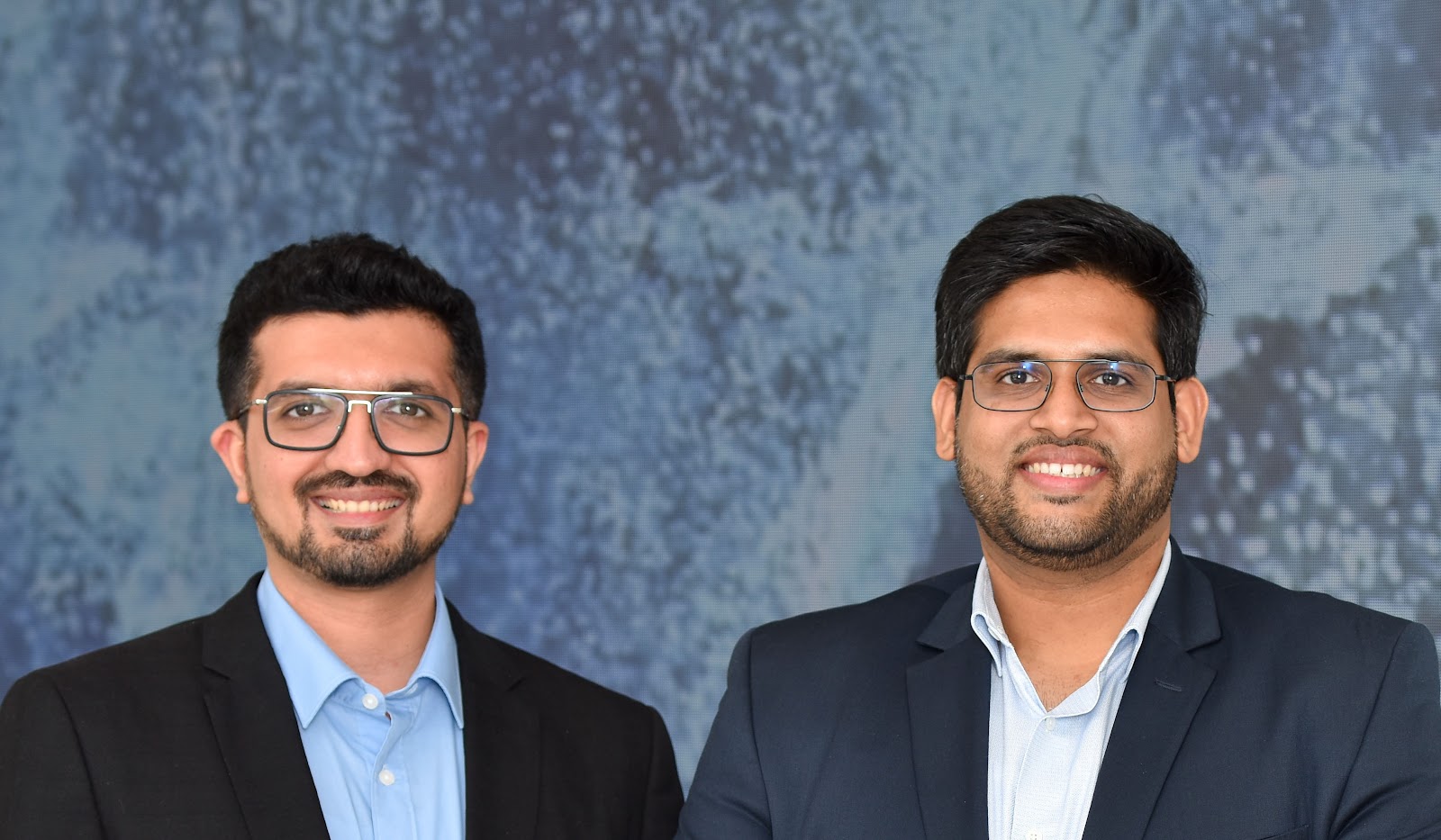
Dialogue with Amrit Om Nayak, Co-founder, Indra | Krunal Patel, Co-founder, Indra
|
|

1
Indra Water’s journey reflects India’s growing urgency around circular water use and decentralized infrastructure. How have your technology and business model evolved to enhance scalability and resilience in this context?
|
We built Indra around the thought that, if treated water is truly high quality, reuse becomes the default. By pushing quality well beyond basic norms with technological innovation, customers avoid expensive downstream steps and unlock greater reuse potential. A typical hotel reuses only 40–50 percent after meeting NGT norms. With Indra, properties like Taj Mahal Palace consistently reuse 80–90 percent, saving money and strengthening ESG performance.
We then removed friction. We productized the plant, standardized modules, simplified operations, and shortened the learning curve. Our systems are smart, can be remotely managed, and enable predictive maintenance for higher uptime and steadier output. Because our units are truly plug and play, they retrofit easily and integrate with biological systems, membrane units, and existing civil infrastructure. This allows many water solution providers to work with us rather than be displaced. The interoperability reduces project risk and speeds up implementation. With predictable performance, we can confidently offer water treatment as a service or pay-per-litre models apart from our standard capex offerings thereby reducing upfront capital burden for customers and accelerating adoption for decentralized reuse.
|
2
Centralised wastewater systems often entail high CAPEX and rigid operations. How has Indra Water’s decentralized model restructured this value chain—from modular treatment design to O&M—and what specific R&D breakthroughs have driven cost efficiency and performance reliability?
|
Centralized plants lock value into concrete, distances, and delay. We moved it to the edge with modular, standardized skids that install fast, shrink civil work, and plug into existing assets. O&M is simpler, potentially remote, and predictive, thereby ensuring that uptime rises and costs fall. Our R&D made the big difference. Our novel electrically driven treatment systems require no bulk chemicals in primary treatment of water or wastewater by enabling in situ coagulant generation, advanced electro-oxidation for recalcitrant pollutants, and strong removal of heavy metals, pathogens, silica and hardness among other pollutants at source. These breakthroughs reduce energy consumption, sludge, and cleaning cycles while protecting downstream treatment assets like RO or other equipment like cooling towers, boilers etc. The result is a repeatable product with far lower lifecycle cost, and a value chain that seamlessly enables capex sale, ‘pay-per-litre’ or Water treatment as a Service (WTaaS) models and rapid scale.
|
3
Your modular systems achieve >95% recovery with minimal chemical input. How do you customise and calibrate these technologies for sectors with vastly different effluent profiles, such as textiles, chemicals, hospitality, or data centres? What feedback loops inform these adaptations?
|
We customise our solution by modifying and controlling the power input to the reactors. We tune variables like current, potential difference across electrochemical circuits, electromagnetic field strength, orientation of electromagnetic field, flow patterns, treatment time, staging among other parameters. We use data analysis, feedback loops, and algorithms to switch between validated treatment settings, through our smart software or firmware. We also have the option to upgrade or downgrade power ratings to match site constraints. The smart digital layer incorporates sensors and soft-sensing estimates, flags anomalies, predicts fouling, and recommends and effects changes, if necessary, in operating settings. In-house advanced lab testing of samples and on-site piloting prior to deployment of commercial solution also help us establish the baseline treatment for the requisite operating conditions and define better treatment boundaries. The result is >95% recovery with minimal chemicals, consistent quality, and faster commissioning across industries.
|
4
Indra Water's growth depends on more than just new technology. It also needs to strengthen the ecosystem enablers—human, financial, and social capital—along the water value chain. How are you cultivating these capacities to sustain long-term impact and scale?
|
We are scaling by building skill, supporting partners, and improving customer trust. We are upskilling our vendor network and co-investing to modernize their fabrication, testing, and QA–QC so quality is repeatable across sites. We deploy portable units to demonstrate results in the field, train installation partners, and run hands-on workshops for pollution control boards and water utilities. We work with financing partners to enable pay-per-litre and WTaaS models that lower adoption barriers. We codify safety, SOPs, and compliance so new teams learn fast and operate confidently. We collaborate with universities for talent and applied research. We share data and case studies openly, building social capital with communities and regulators. This ecosystem-centric approach is helping us achieve impact and accelerate our scale.
|
5
With evolving Zero Liquid Discharge (ZLD) norms and industrial reuse mandates reshaping compliance and investment patterns, how does Indra Water translate these policy shifts into its technology design, deployment, and market strategy?
|
With the tightening of ZLD norms and reuse mandates, at Indra, we are pushing more capability upstream so plants meet compliance with headroom. Our electrically driven primary treatment now also successfully removes key cations and anions in inorganic streams apart from a wide variety of other suspended, dissolved and organic pollutants, thereby reducing dissolved solids, hardness, sulfate, and silica at source. This lowers RO scaling, reduces anti-scalant dependence, and delivers higher recoveries. Customers see 20–25 percent cost savings through lower RO reject volumes and higher ZLD uptime. We standardize these gains in modular skids, validate on portable units, and deploy fast with simple O&M. The result is better recovery, steadier quality, and higher reuse across sectors. Our approach is aligning financing to outcomes, offering pay-per-litre models that make policy ambitions more bankable and solution adoption, faster.
|
6
Looking ahead to 2030, how do you envision Indra Water’s role in advancing India’s climate resilience and circular-economy goals—both in terms of technology innovation and systemic impact metrics?
|
We see Indra making reuse the default at the point of source, By 2030. This unlocks reliable water where it is needed, improving availability, accessibility, and affordability for industry, campuses, and cities. Our technology simplifies treatment by cutting components, steps, and civil works, so plants install faster and run with higher uptime. We convert complex EPC builds into standardized products that scale cleanly across geographies. Each litre reused displaces freshwater withdrawals, tanker miles, chemicals, and carbon. Indra is on track to treat 50 billion litres per annum by 2030, positively impacting over 5 million lives. This is estimated to offset more than 150,000 tons of sludge, reduce over 130,000 tons of chemical use, and potentially avoid over 35,000 tons of greenhouse gas emissions annually versus conventional approaches. Indra will continue to measure impact transparently across quality, recovery, energy, sludge, and emissions.
|
7
Financing decentralized infrastructure often requires innovative models. What kinds of financial partnerships or blended structures do you see as catalytic for scaling decentralized wastewater solutions in India?
|
We are continuously working on models in finance to be as flexible as our hardware. Customers can choose a straight capex purchase with either recurring O&M or comprehensive annual O&M. They can also offset part of the capex and recover it through a structured recurring fee over time. For asset-light adoption, Water Treatment as a Service is available, where a third-party investor owns the plant, leases it to the customer at an agreed water tariff, and Indra operates and maintains it for a service fee. We are also exploring hybrid co-investment models in which financiers, customers, and Indra share risk and return, enabling lower tariffs and faster rollouts. Across models, the goal is simple: predictable performance, easier onboarding, and scalable reuse.
|
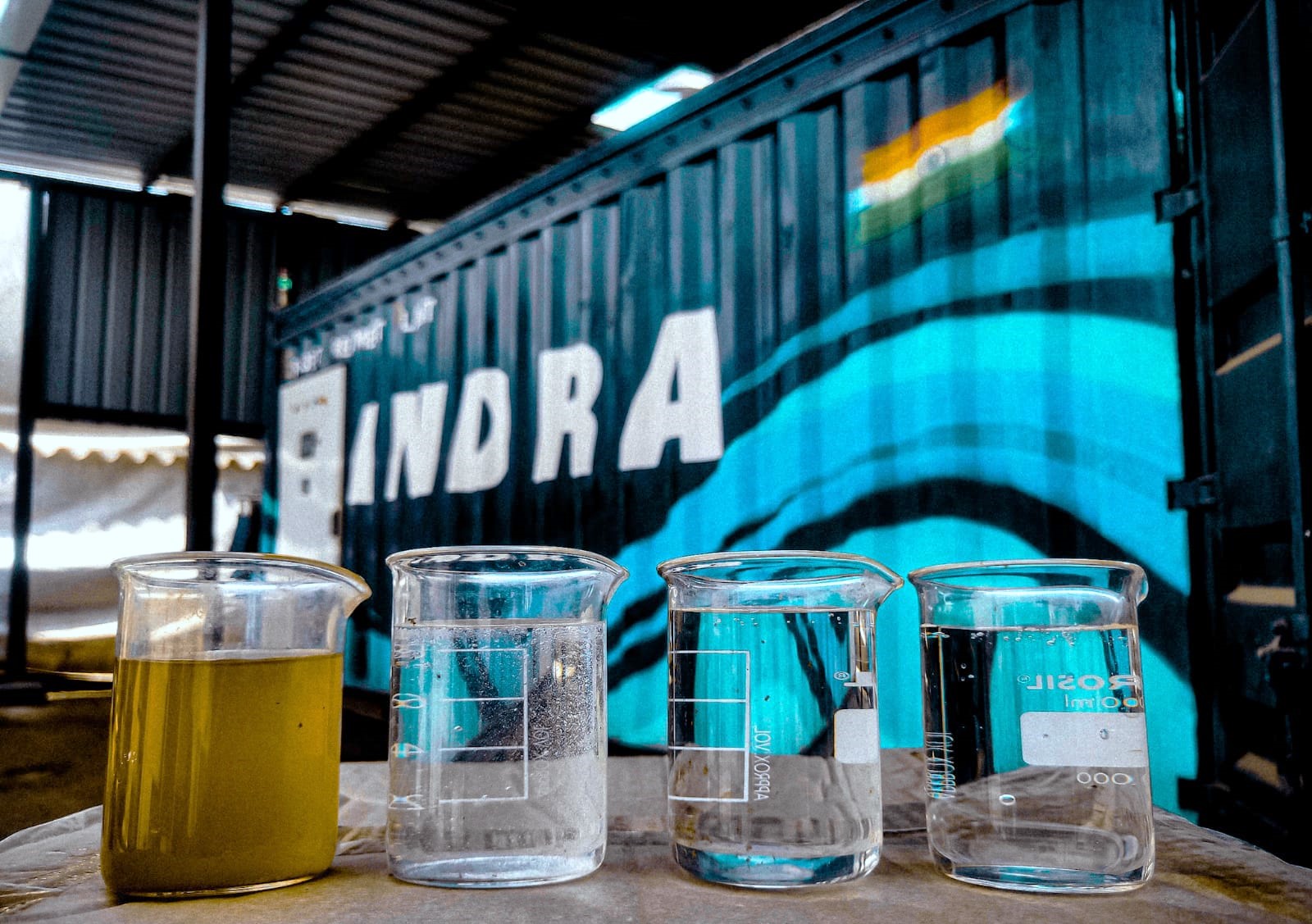
Treatment results of an Indra ETP at a textile industry in Noida, UP - recycling up to 60,000 litres of wastewater per day
|
|
Amrit Om Nayak and Krunal Patel are co-founders of Indra, a deep-tech water company turning wastewater into dependable reuse-quality water. They are University of Washington alumni and combine rigorous engineering with clean-tech execution. Amrit has built extensively in advanced automotive systems, thermal batteries, and software/IoT ventures; Krunal brings product development experience across Formula race cars, tidal turbines, and advanced fluid mechanics. Together they’ve led Indra’s patented solution from lab to scale, treating 4+ billion litres, cutting sludge and chemicals dramatically, and proving that standardized, modular, data-driven plants can deliver circular water at speed.
About Indra
Indra is pioneering decentralized treatment of wastewater at the point of source using electricity. We have received strong support from the Department of Science & Technology, Government of India for development of deep technology in water treatment. Our patented solution is called ElectroX and is based on non-contact micro-electrolysis. It is chemical free, saves up to 90% space and is eco-friendly. Indra has treated over 4 billion litres of water while offsetting over 12500 tons of sludge, 10,500 tons of harmful chemicals and potentially 2,800 tons of GHG emissions. We are presently engaging in over 50 million liters per day of treatment capacity with end customers like Unilever, Tata Steel, Taj Hotels, Hindalco, Everenviro, Tata Tannery among others.
We were one of the winners of the urban freshwater challenge by Uplink (World Economic Forum) and HCL Technologies and were also named to the prestigious APAC Cleantech25 companies list in the Asia pacific region in 2023. We were shortlisted by Global Water Intelligence in the 'Breakthrough Technology Company of the Year' category for 2024. Indra was also awarded as the 'Cleantech Asia Pacific Company of the Year' in 2025 by Cleantech Group.
For more information, go to: https://indrawater.com/
|
|
About Impact Investors Council:
Impact Investors Council, India (IIC) is a member-based national industry body formed with an
objective to build and strengthen the impact investing eco-system in India. To know more about our work visit https://iiic.in or reach out to secretariat@iiic.in
|
Disclaimer: Data and Information in this newsletter is made available in good faith with the exclusive intention of helping market and ecosystem players, policymakers and the public build a greater
understanding of the Indian impact investing market. The data is collated from sources believed to be reliable and accurate at the time of publication. Readers are urged to exercise independent judgment and diligence in the
usage of this information for any investment decisions
Some of the information provided in this newsletter is supplied by third parties. It is important that all users understand that third party information is not an endorsement of any nature and has been put together with the
sole purpose of benefiting stakeholders.
|
| Unsubscribe |
|
|
|