
About the Program
India’s textile and apparel sector sits at the intersection of global supply chains, domestic industrial growth, and climate transition. It is both a major exporter to international markets and a large and growing domestic market. It is also highly exposed to climate and resource pressures, while supporting millions of livelihoods across complex and fragmented supply chains. The transition of this sector is therefore not only an environmental challenge, but it is also a question of industrial competitiveness, supply chain resilience, and economic stability.
Recognizing these multiple imperatives, Impact Investors Council (IIC) and the Impact Investing Institute jointly launched the program “Unlocking Investor Action for a Just Transition in India’s Fashion Sector.” The program adopted a value-chain approach, from sustainable cotton cultivation through to end-of-life textile waste management and recycling, to identify where climate and social outcomes intersect, where capital flows are most needed, and which transition pathways could be realistically strengthened.
The program engaged a diverse group of stakeholders, including equity and debt investors, DFIs, philanthropic foundations, catalytic capital providers, entrepreneurs and industry experts to explore what collective actions could play a more proactive role in supporting a Just Transition across India’s textile and apparel ecosystem.
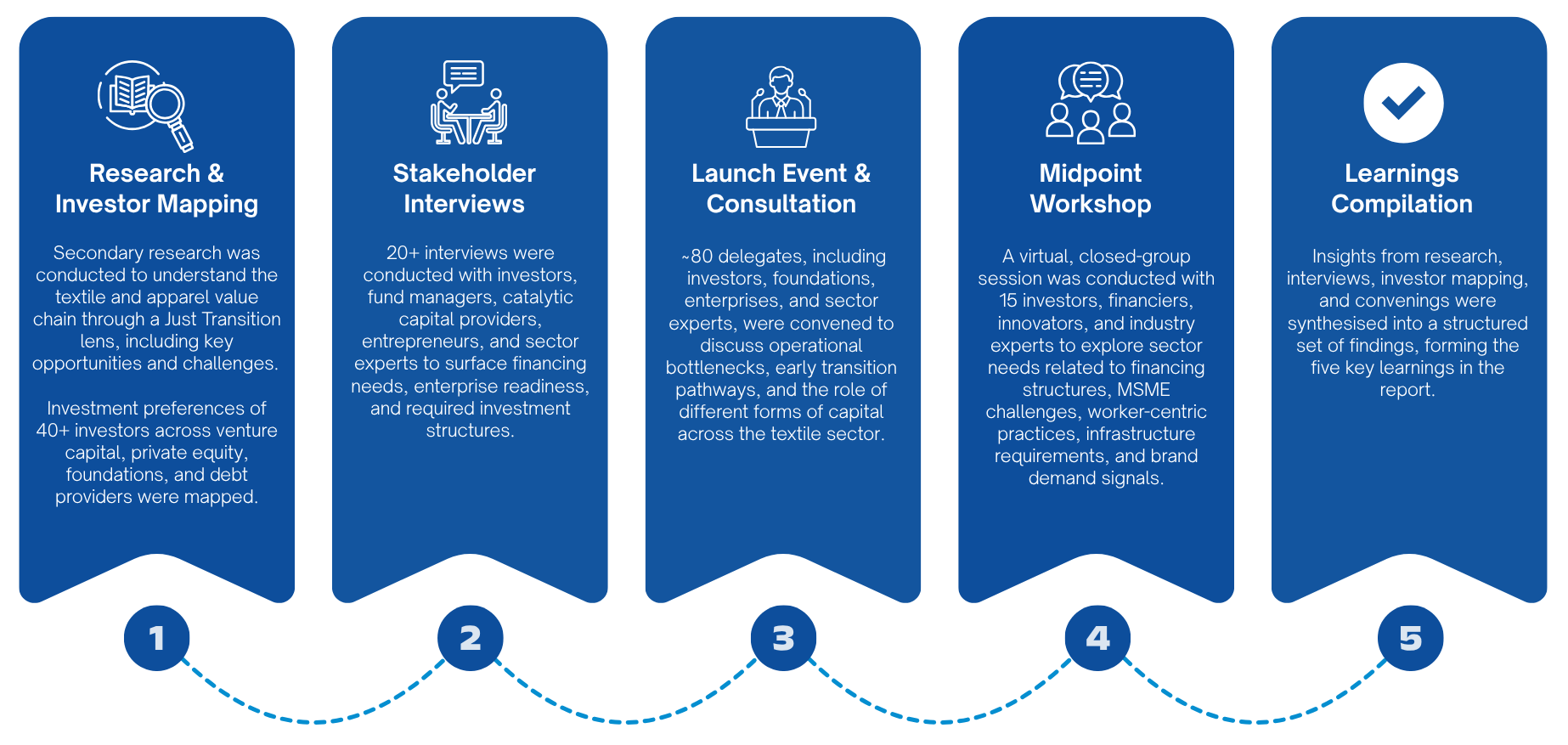
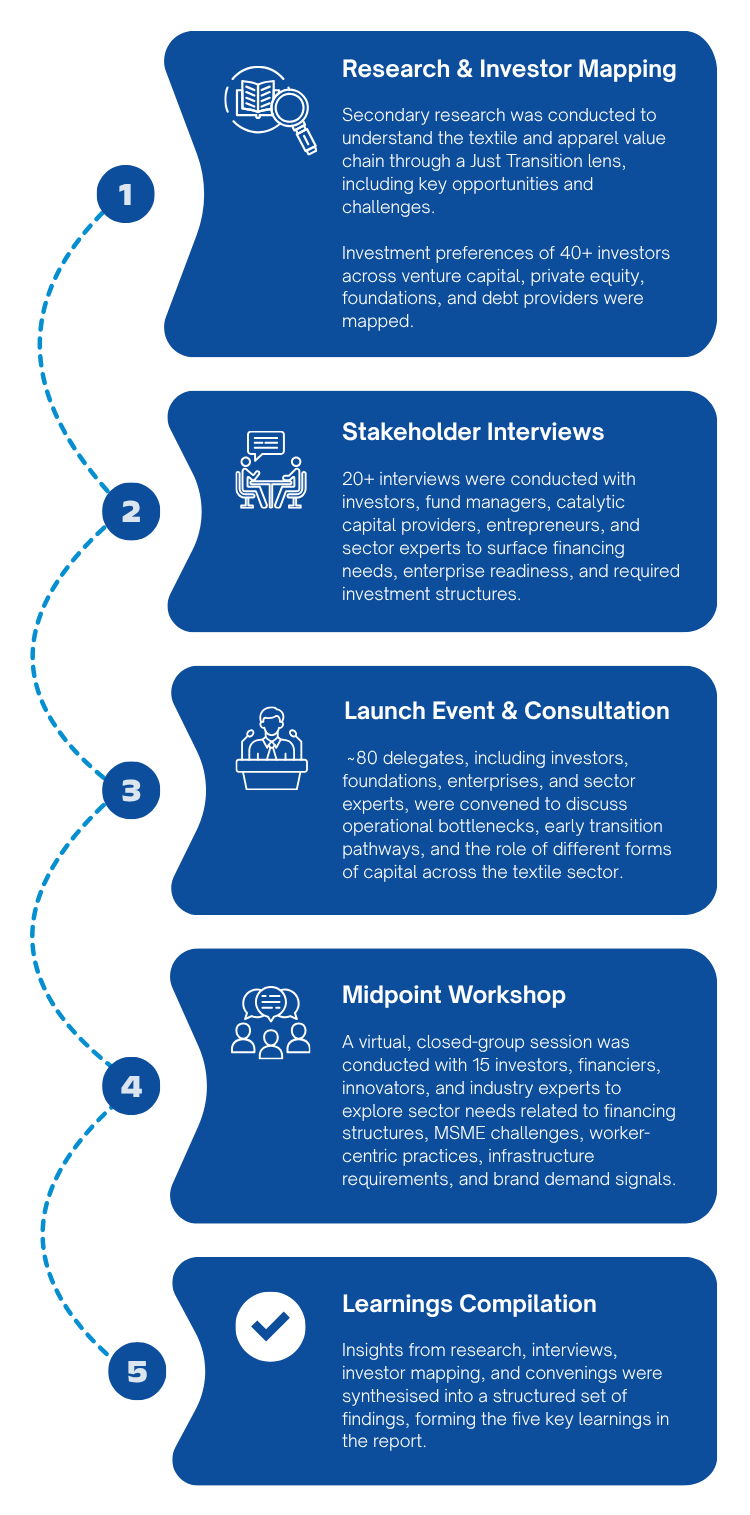
Some of the activities across the duration of the program included:
About the Learning Report
The learning report draws on a year of engagement with multiple stakeholders, including investors, financial institutions, enterprises, and industry experts, to understand what it will take to unlock investment for a Just Transition across the textile value chain. It maps where investor interest is concentrated, identifies the structural gaps that continue to constrain capital deployment, and surfaces five key insights that cut across production, manufacturing, consumption, and recycling.
Across the key insights, a consistent picture has emerged that the constraint is not a lack of capital, nor a lack of solutions, but how both are structured and aligned.
Featured Case Studies
As part of this program, a range of impactful efforts across the textile and apparel value chain were identified and highlighted, spanning alternative materials, manufacturing, and textile waste management and recycling. The following case studies have been curated to showcase these efforts. They highlight investment approaches, financing structures, and on-ground implementation experiences, offering practical insights for those seeking to better understand the sector.

1. Omnivore Venture Capital
Omnivore is an impact venture capital firm investing in agrifood innovation and climate solutions in India. This case study explores Omnivore's investment in STCH, a fabric and material innovation enterprise developing agri-derived fibres, including banana, hemp, and Himalayan wild grass, for the global apparel industry. It highlights how early-stage equity investment in alternative materials can create pathways that are commercially compelling and structurally connected to farmer livelihoods, and what the broader ecosystem needs to enable this segment to scale.
Read More
2. Good Fashion Fund
The Good Fashion Fund is a blended private credit vehicle that provides long-term loans to textile and apparel manufacturers investing in cleaner production technologies, renewable energy, and improved worker conditions across India and Bangladesh. This case study examines how its financing model, combining philanthropic first-loss capital, technical assistance, and commercial debt, reaches Tier-2 and Tier-3 manufacturers where transition costs are most concentrated, and what it reveals about the conditions necessary for this approach to move from demonstration to scale.
Read More
3. Saamuhika Shakti - A Collective Impact Initiative (Initiated & Funded by H&M Foundation)
Saamuhika Shakti is a collective impact initiative initiated & funded by H&M Foundation, working in Bengaluru since 2020 to strengthen livelihoods and build circular systems for textile waste recovery. This case study focuses on its Textile Recovery Facility model, a hub-and-spoke system for post-consumer textile waste that has diverted over 683 metric tonnes of textiles from landfills and reached over 622 waste pickers through capacity building and green job creation. It explores how philanthropic capital can enable end-to-end system-building, and what the Bengaluru experience offers as a replicable model for inclusive circular textile recovery.
Read More
4. Upaya Social Ventures - Technical Assistance Facility (TAF) for Textile Waste Management
This case study features Upaya Social Ventures Technical Assistance Facility for Textile Waste Management anchored by Laudes Foundation, combining concessional financing with impact-linked incentives and tailored technical assistance for three enterprise partners: Saahas Zero Waste, WeVois Labs, and Green Worms. This case study examines how the facility was structured and implemented in practice, what it revealed about enterprise readiness in an early-stage sector such as textile waste management, and the lessons it offers for investors seeking to deploy capital in a segment where worker inclusion is central to long-term commercial viability.
Read MoreContact Us
If you wish to know more about the program, please feel free to write to Ranjna Khanna at: ranjna.khanna@iiic.in