
Q1: How has your investment thesis evolved in India, and which two sectors are central to driving climate resilience? How do demographics or policy factors influence these priorities?
GAWA Capital’s core mission has always been to improve the lives of low-income, vulnerable communities. Guided by this mission, its India strategy has moved from broad-based financial inclusion through microfinance and MSME lending to a sharper focus on rural and agricultural finance and now toward accelerating the adoption of climate-smart solutions. This shift is based on a clear insight: traditional microfinance and MSME financial models don’t fully meet the needs of informal-sector households, whose seasonal incomes and diverse livelihoods require more tailored financial products. Although India has made major strides in expanding basic financial access, gaps remain in the depth, relevance, and quality of services, especially for communities most exposed to climate and weather shocks. In response, through its newest fund called the Kuali Fund, GAWA plans to invest capital to transform financial institutions into effective financers of climate solutions while also investing in climate-solution providers that can deliver accessible, high-impact climate mitigation and adaptation tools. This evolution is driven both by the changing realities of vulnerable communities and by the lessons GAWA has learnt across successive funds.
Q2: The Huruma Fund and the Kuali Fund use a blended finance structure to de-risk investments. When evaluating a climate-resilient venture, how do you align both investor expectations with the mandate of achieving deep impact before deploying capital?
GAWA Capital aligns investor expectations with its deep-impact mandate by screening every investment opportunity through a disciplined dual lens: strong economics and clear, measurable impact on vulnerable communities. Only ventures that hit both thresholds move forward. Commercial and impact due diligence happen in parallel, ensuring the model is commercially sound while genuinely strengthening climate resilience for vulnerable communities and businesses. Impact KPIs and covenants are baked directly into investment agreements, so expectations are explicit from day one. The Kuali Fund’s blended-finance structure then uses catalytic capital to absorb early or climate-related risks, protecting private commercial investors while enabling high-impact ventures to scale. Finally, the Technical Assistance Facility helps investees deliver impact reliably, further de-risking the investment case. Together, these mechanisms allow GAWA to secure investor alignment, maintain discipline, and deploy capital only when both impact and financial expectations are clearly met.
Q3: When it comes to offering technical support in the context of resilience, what are the key areas where Gawa Capital excels—product innovation, capacity building, risk assessment, market development, etc.? How does the technical assistance approach differ from other impact investors in driving both financial performance and measurable impact?
GAWA Capital delivers technical assistance for climate resilience by combining product innovation, institutional capacity building, risk assessment, and market development into one integrated support model that is tailored to help investees cater to the needs of low-income, climate-vulnerable communities and businesses. It supports investees in designing climate-smart products suited for vulnerable communities and businesses, improving staff and systems and building tools to assess climate risk building
What differentiates GAWA is that its TA is directly tied to both financial performance and measurable impact. Instead of treating TA as a side activity, GAWA uses it to strengthen unit economics, reduce portfolio risk, and expand viable markets while ensuring real gains in climate resilience and improved outcomes for vulnerable communities. This makes investees more capable, investors more protected, and impact more reliable – setting GAWA apart from conventional impact investors.
Q4: Given the urgent and massive need for climate resilience in emerging markets, what is the most significant hurdle you face in scaling your investment and TA model to meet this demand? Is it a lack of investable opportunities, limited TA funding, or a different bottleneck? How are these bottlenecks addressed?
GAWA Capital’s biggest hurdle isn’t investment capital – it is the shortage of readily investible, climate-ready institutions targeting low-income and vulnerable populations, a gap worsened by the flawed VC “go-big-or-go-home” mindset that forces early climate ventures into unsustainable hyper-growth. This pressure weakens fundamentals and leaves many promising companies unfit for investment and driving them away from the impact they can create in the long term across both financial and developmental metrics. In addition, climate-solution providers and financial institutions often lack the products, climate-risk systems, and operational depth needed to serve vulnerable communities. TA funding remains far too limited to fix these gaps quickly. GAWA tackles this in three ways. Firstly, by using blended finance to de-risk investors, it significantly increases the scale of capital that can be deployed into the goal of achieving climate resilience for low-income vulnerable communities. Secondly, by making investments across the capital spectrum – equity, mezzanine and debt, depending upon the specific need of the investees – instead of force-fitting them to a particular type of capital. Lastly, by deploying intensive technical assistance to build real capacity by backing patient, sustainable growth and deep impact.
Q5: Could you please describe a particular example of how your technical support helps an organisation? How has your approach to assisting climate-resilient startups throughout India been influenced by this intervention?
GAWA’s previous fund, the Huruma Fund, was mandated to help inclusive finance institutions deepen their agricultural finance offerings and expand outreach to smallholder farmers. Through Huruma, GAWA Capital invested in Pahal Microfinance. Using a two-stage process, GAWA Capital supported Pahal in identifying the most cost-effective ways to broaden its reach among smallholder farmers. These insights formed the foundation for the next phase, in which Pahal is now working with an external agency on a full-cycle initiative—covering market scoping, product design, piloting, monitoring, roll-out, and scale-up. The support goes beyond a market study or pilot, extending all the way to scaling the solution. In parallel, the project is strengthening Pahal’s capabilities in market research, digital risk management, and partnerships with agritech companies and cooperatives.
GAWA Capital has not yet begun investing in India through its latest fund, Kuali, which will invest in inclusive finance institutions as well as climate solutions providing companies. Once Kuali Fund starts investing, it intends to focus on resolving critical bottlenecks of investee companies through co-designed, practical projects and not just consulting or pilot programmes. In addition to helping investee companies develop and launch products and services suitable for small farmers and/or MSMEs, we anticipate working with portfolio companies to build robust frameworks for quantifying their positive environmental and social impact (e.g., carbon footprint) and translating these improvements into verifiable cost savings for both operations and customers. We may also help identify and establish distribution networks, local partnerships, and sales arrangements to support successful entry into new markets (Latin America/Europe). Additionally, we can help companies implement a strong E&S strategy and business-intelligence infrastructure to enable efficient internal data capture, support climate and social strategies, inform decision-making, and align team incentives.
Q6: How does GAWA ensure that impact performance is not deprioritized?
GAWA ensures that impact is never deprioritized by hardwiring it into the investment process, portfolio management and incentive structures. Every investment must pass a dual hurdle—commercial viability and clear, measurable impact on vulnerable communities. Impact isn’t a parallel track; it’s integrated into due diligence, investment committee decisions, and risk assessment. Once invested, GAWA embeds impact covenants and KPIs directly into legal agreements, making impact delivery an obligation, not an aspiration. Moreover, GAWA’s funds provide a rebate on principal on achievement of impact KPIs. The team also conducts ongoing monitoring, third-party verification, and annual evaluations to ensure progress is real and consistent. Finally, 50% of GAWA’s performance fees are linked to impact results, aligning the fund’s incentives with its mission. This combination of structural safeguards, contractual commitments and incentive alignment keeps impact at the center of every decision.
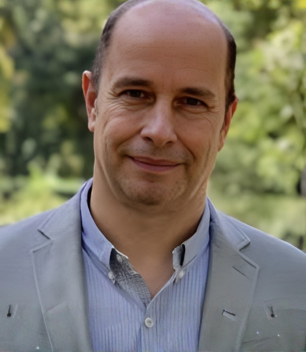
Agustín Vitórica, Co-Founder and Co-CEO, GAWA Capital
Agustín has been dedicated to impact investing since founding GAWA in 2009. Previously, he held the position of Managing Director at Dalbergia, one of Spain's largest family offices, where he worked for almost 10 years focusing on Venture Capital & Private Equity investments. Formerly an auditor and consultant to financial institutions at Deloitte, Agustín holds an MBA from the Kellogg School of Management and has played a key role in supporting the development of the Impact Investing sector in Spain.
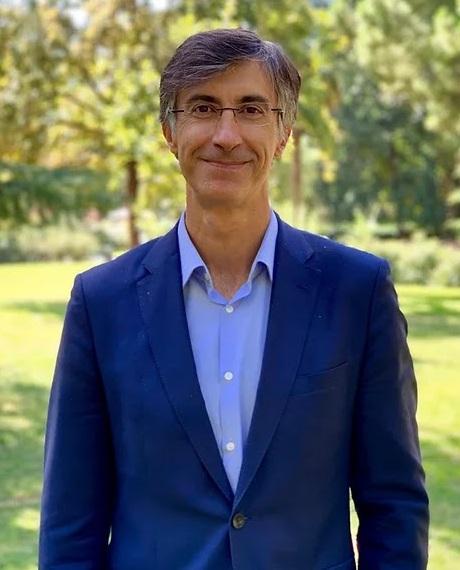
Luca Torre, Co-Founder and Co-CEO, GAWA Capital
Luca has spent most of his career investing in and advising microfinance and financial institutions. Prior to founding GAWA, he worked at Credit Suisse Investment Banking in New York advising many microfinance institutions in accessing capital markets, including Banco Compartamos' IPO. Luca gained on-the-field operating experience working for Annapurna, an Indian MFI. Luca began his career at BCG and holds an MBA from Kellogg where he was awarded Siebel scholarship for leadership.
Background of GAWA Capital
GAWA Capital is a European impact investment management firm committed to supporting positive social and environmental impact while generating financial returns for investors. With over 16 years of track record and EUR 300 million in cumulative assets under management, GAWA Capital has made investments across 20 countries in Latin America, Asia and Africa. GAWA's funds invest in debt and equity in financial institutions, agriculture companies and innovative climate solutions providing companies that contribute to positive social and environmental impact. In addition to debt and equity investments, GAWA Capital also provides technical assistance to transform the investees and maximize their impact.


