.png)
Q1: Green Artha is positioned as a climate-first fund with a focus on first-of-a-kind solutions and IP-driven innovations. Could you share more about why you focus on Industrial Decarbonisation and the role of innovation?
Industrial growth in India is expected to grow by 16x by 2070, resulting in a doubling of energy demand1, material requirements2 and an explosion of new buildings and infrastructure3.
Growth of this magnitude will require significant capital investment in long-term assets. If this investment is into high-polluting legacy technologies, increased pollution will be locked in for 10-70 years, increasing India’s annual emissions by +30% annually4.
We believe that as India embarks on rapid industrial expansion, the adoption and scale-up of clean innovations can prevent the lock-in of emissions associated with long-life incumbent technologies.
As a country, we are already making significant strides to address climate risk and capitalise on green growth opportunities. Invest India has identified clean technologies as some of the most promising and thriving sectors for growth and investment5 and the government has made ambitious 2030 commitments to reduce the emissions intensity of its GDP by 45%, transition to a minimum of 50% renewable energy, and create carbon sinks6.
Indian industrial decision-making is also influenced by climate risks and opportunities. We have seen that businesses will transition provided there is a strong economic value proposition.
At the same time, India is established as the 3rd strongest innovation ecosystem7 globally, with a reputation for frugal innovation. Our innovators and entrepreneurs are developing technologies that have the ability to outperform high-emissions legacy technologies based on performance and economic factors.
All of these create a very significant investment opportunity, aligning market dynamics, government policy and an active climate innovation ecosystem. This is the foundation and rationale for our focus on industrial decarbonisation as a driver of economic growth.
Q2: How do you identify opportunities as an organisation and where do you see the most interesting opportunities currently?
As a thesis-driven organisation, our focus is on identifying the highest emissions-intensity, highest growth areas, where there is the ability to make meaningful impact at scale through the adoption of innovative technologies.
We look for IP-led technologies and materials that can transform entire industries or sectors, preventing the adoption of high-pollution, long-life assets. Our focus areas include industrial energy, materials, resource efficiency, green chemistry and process optimisation for hard-to-abate and rapidly growing sectors.
Q3: Where do you see challenges around the growth and adoption of innovation, and how does Green Artha de-risk opportunities?
Even with a strong opportunity and value proposition, we see a meaningful innovation-to-industry gap in the market currently. Often, there is a difference between what industrial customers expect as commercial readiness and what early-stage startups perceive as market readiness in terms of appropriate business models, operational processes for scale, and timelines for innovation adoption.
Company de-risking and commercialisation support is a core part of our approach. We enable climate businesses to better understand commercialisation cycles, industry standards, and pricing strategies for adoption. We partner this strategic advisory with appropriate capital to de-risk businesses, bridge the multiple valleys of death, enable integration with industry and secure follow-on funding for scale.
Startup-specific support is determined in response to market needs, customer commercialisation cycles, business capabilities, capital structure requirements, business models, available investment instruments, team structure and sector/industry/customer concerns.
We combine knowledge of capital market constraints, the climate capital value chain and startup and technology operations to increase access to capital. From a financing perspective, we’ve seen that climate technologies have distinct funding needs depending on their stage, scaling requirements and business model. Many require First-of-a-Kind (FoaK) capital to establish plants or support business models that accommodate customer procurement, shifting from CapEx to OpEx. We work to enable debt readiness, balance different pools of funding and manage the capital structuring for their first commercial plant.
This multi-pronged approach has been refined over the years and validated through real-world application. At the same time, we recognise that commercialisation cannot follow a one-size-fits all model or be templatized for scale. Commercialisation of climate startups requires strategic customisation based on the company’s stage, team capabilities, sector, and evolving market dynamics to meaningfully create value.
Q4: Green Artha has supported enterprises such as Cancrie, Brisil, and Zerocircle. Could you walk us through these examples and explain how they fit into India’s broader industrial decarbonization pathway?
It would be helpful here to start with a brief context on each of these companies and the work that they do.
Cancrie produces nanocarbons from waste materials, improving battery life by 40% and battery density, reducing the need for rare earth materials and customer input costs.
Brisil converts agricultural waste to green silica in an energy-efficient process, enabling global footwear, tyre and beauty brands to cost-effectively decarbonise their production.
Zerocircle produces seaweed-based plastic and paper alternatives for carbon-neutral, home-compostable and biodegradable packaging solutions, with use cases in food packaging that are on par with petroleum-based plastics.
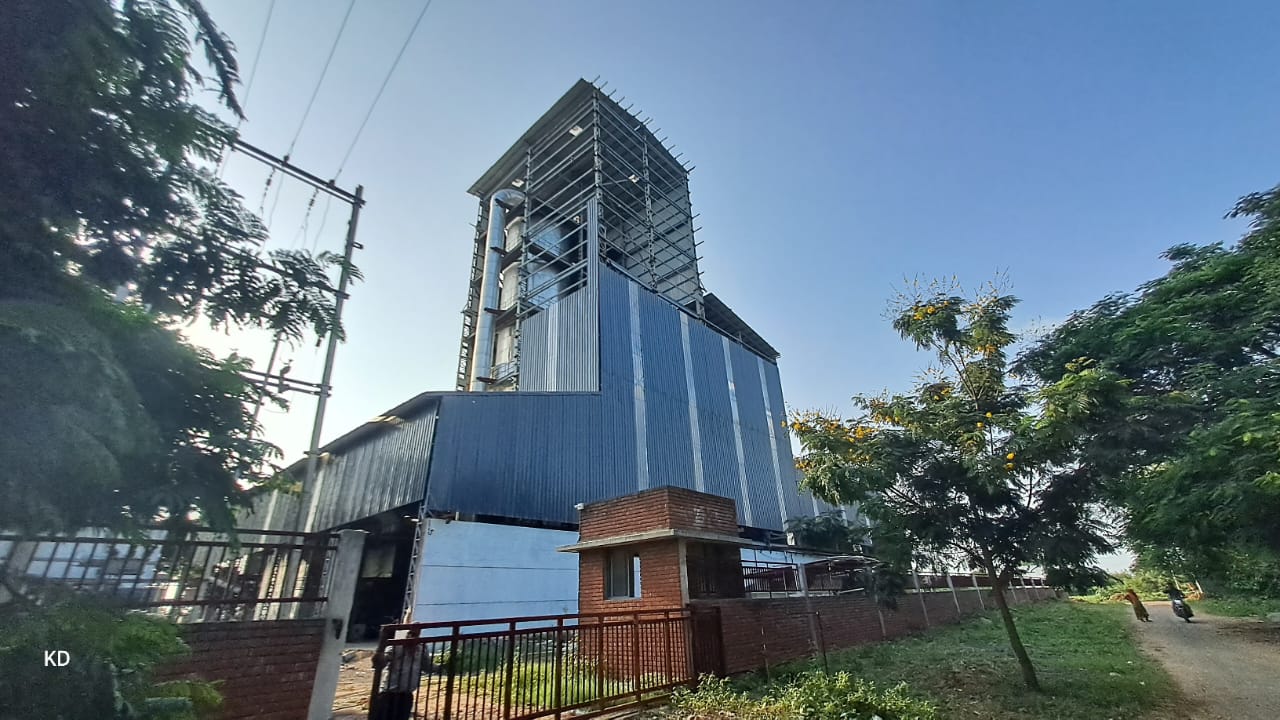
Green Silica Factory of Brisil Technologies
Each of these companies has the ability to systemically transition the industry, and in most cases, multiple industries that they supply into. They do so in an economically viable manner, without requiring significant behaviour change by customers or end-consumers. This is particularly important for integration at scale. They are (or have line-of-sight on being) cost-competitive, and enhance output or market access. With an additional focus on circularity, they help create supply-chain resilience and improve resource efficiency.Q5: Industrial decarbonization often involves complex, indirect emissions savings. How does Green Artha evaluate impact at the enterprise level? What methodologies or indicators do you rely on to ensure both environmental and financial ROI? What methodologies or indicators guide your impact assessment?
As a climate-first organisation, climate impact assessment is fundamental to all our processes, and we are proud to serve on the global Steering Committee for Project Frame.
GA evaluates a company’s potential mitigation impact (i.e., unit-level impact x scale), using Project Frame’s methodology and GHG Coalition protocols for scientific measurement, prioritising total potential impact mitigation. For example, a 5-10% change in emissions intensity that is likely to be adopted in a high-emissions-intensity, hard-to-abate sector like steel would be selected over a technology that has a 30% reduction in emissions in a sector that has low overall attribution, such as spice drying or a product that is unlikely to see meaningful adoption.
Equally important to us are solutions with embedded impact. By this, we mean businesses that shift the materials and processes of how goods are produced, thus making many more products sustainable, as opposed to solutions where climate impact is added on to an existing solution or requires behaviour change.
Finally, we believe that the greatest amount of impact on climate and jobs is achieved with scale. The potential for climate impact at scale is the first screening for every investment, and impact is only accounted for when there is a strong case for additionality.
Q6: Green Artha has also been instrumental in convening platforms such as the Climate Capital Network. How do partnerships, networks, and catalytic capital play a role in accelerating industrial and non-industrial climate solutions in India?
India will need $21T8 in capital to peak by 2045. Only a fraction of this has been raised to date. There are meaningful gaps in the continuum of capital (smooth transitions from seed to Series A, Series B and beyond) as well as the capital stack and fit-for-purpose funding. At the same time, existing funding will need to be deployed as efficiently as possible.
Catalytic capital has a particularly important role to play in market making and de-risking innovation to make it market and commercial funding ready.
The Climate Capital Network works to develop the partnerships and showcase the models needed to bridge these gaps and improve the access to, effectiveness and efficiency of climate capital in India.
We see our role as a convenor of CCN as important to helping unlock more capital, collaborations, bridging access to opportunities and showcasing innovative models that can create meaningful efficiency and efficacy in the climate finance ecosystem. We have some interesting initiatives and activities that we will be launching next year to accelerate this work.
.jpeg)
Starlene Sharma, Co-founder & Partner, Green Artha
Starlene Sharma has 18+ years of experience in climate, investments and entrepreneurship. Prior to Green Artha, Starlene was the founding CEO of AIC Sangam, India’s first clean-tech incubator, and Principal at Sangam Ventures. Prior to that, Starlene was part of the founding leadership at two tech-for-development startups in India. She started her career as the first staff member and eventual Portfolio Manager at Landmark Advisors, where she grew the portfolio from $80M to $880M. She is the climate editor for Business India & the founder of the Cleantech Women’s Innovation Network.

Maya Chandrasekaran, Co-founder & Partner, Green Artha
Maya Chandrasekaran has 18+ years of experience across climate, investments and entrepreneurship. She was one of the founding members of Menterra Venture Advisors and founding leadership at Babajob.com, India’s first digital livelihoods platform, supporting over 10mn informal sector job seekers. Maya’s prior experience includes helping grow Janalakshmi, one of India’s largest urban MFIs, and Capvent Fund of Funds. Maya also co-founded and continues to actively run the 500+ member Women in Investing network, is an international jury member for the Cartier Women's Initiative, and mentors several startups and impact groups.
Background of Green Artha
Green Artha (GA) accelerates the market adoption of the innovations and business models that will be the backbone of the Green Economy. The firm was established to address the financing and commercialisation support gaps experienced by high-impact climate tech businesses across industrial decarbonization, including its energy transition and resource efficiency, and with implications on sustainable infrastructure and circularity.


